
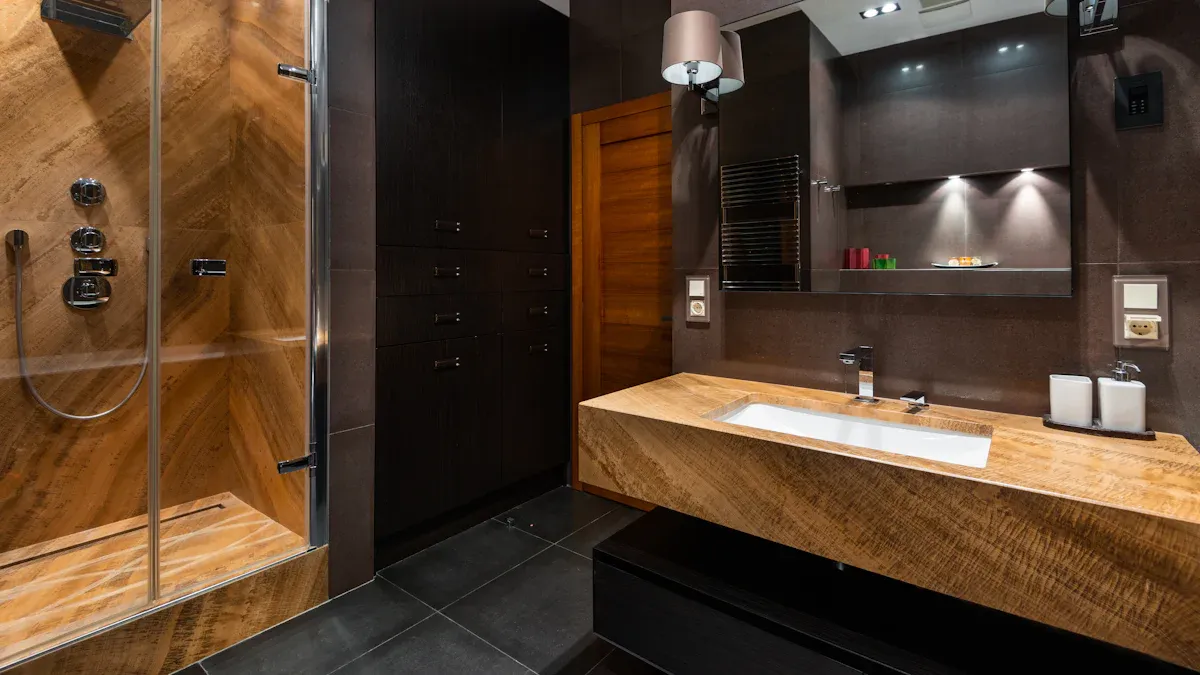
Tailor-made zinc covers offer unparalleled advantages in design, functionality, and brand identity for global sanitary brands. Customization options for zinc covers directly empower global sanitary brands to achieve unique product differentiation and meet precise market demands. The global sanitary ware market was estimated at USD 34.3 billion in 2024. This market is projected to grow to USD 61.6 billion by 2034, showing a Compound Annual Growth Rate (CAGR) of 6.2%. This significant growth highlights the critical need for brands to stand out. A custom Zinc Alloy Kitchen and Bathroom Decorative Cover helps brands achieve this distinction.
Key Takeaways
- Custom zinc covers help brands make their products special and different.
- These covers improve how products look and make them stronger.
- Custom zinc covers can meet special needs like stopping slips or draining water.
- Brands can choose different materials, designs, and finishes for their covers.
- The covers can have smart features like locks or work with sensors.
- Making custom covers involves planning, testing, and careful production.
- Custom zinc covers work well in luxury bathrooms, public restrooms, and hospitals.
The Strategic Advantage of Custom Zinc Covers for Global Sanitary Brands
Custom zinc covers offer global sanitary brands a significant strategic advantage. They allow brands to move beyond generic offerings, creating products that resonate deeply with specific markets and consumer needs. This approach strengthens brand identity, meets precise functional demands, and adapts to diverse global trends.
Enhancing Brand Identity and Market Differentiation
Custom zinc covers provide a powerful tool for brands to carve out a unique space in the competitive sanitary market. They allow for the creation of products that are not only functional but also visually distinctive.
Creating a Unique Visual Signature with Custom Designs
Brands establish a unique visual signature through custom designs. Consumers actively seek products that reflect their individual interests and styles. This demand drives producers to offer more customization options, including specific colors, finishes, and distinctive design features. For instance, while modern and minimalist styles remain popular, a resurgence of interest in antique and retro designs also influences product aesthetics. Custom zinc covers allow brands to cater to these varied preferences, ensuring their products stand out.
Standing Out in Highly Competitive Markets
In highly competitive markets, differentiation is key. Custom zinc covers provide a tangible way for brands to distinguish their offerings. They move beyond basic utility, transforming a functional component into a statement piece that reinforces brand values and aesthetic principles. This strategic move helps brands capture consumer attention and build loyalty.
Meeting Specific Functional Requirements
Beyond aesthetics, custom zinc covers excel at meeting specific functional requirements. They address practical challenges in diverse environments, ensuring optimal performance and user satisfaction.
Addressing Diverse Anti-Slip and Drainage Needs
Custom zinc covers effectively address diverse anti-slip and drainage needs, particularly in bathrooms and kitchens. Manufacturers design these covers, often from high-grade ZA-8 zinc alloy, with a micro-textured anti-slip surface. This feature significantly enhances safety in wet areas. They serve as ideal bathroom drain covers and bathroom drain plates, directly managing water flow. Their application also extends to shower accessories, further supporting their utility in controlling water in bathroom environments.
Integrating Advanced Security and Performance Features
Custom zinc covers integrate advanced security and performance features. Sanitization and touchless operation are essential for minimizing cross-contamination, especially in healthcare and hospitality settings. These covers incorporate hygiene and safety features, such as smooth, non-porous surfaces that prevent bacterial buildup. They also allow for easy sanitization with common disinfectants and offer compatibility with automatic sensor systems. Furthermore, corrosion resistance and durability are crucial for high-moisture environments like bathrooms and kitchens. Manufacturers achieve this through advanced protective coatings and multi-layered finishes, ensuring long-lasting performance.
Adapting to Global Aesthetic Trends and Regional Preferences
Global sanitary brands must adapt their products to diverse aesthetic trends and regional preferences. Custom zinc covers provide the flexibility to meet these varied demands.
Designing for Diverse Consumer Tastes and Cultural Nuances
Designing for diverse consumer tastes and cultural nuances is paramount. Modern consumers prioritize stylish, customizable, and space-saving sanitary ware. They are willing to invest in sanitary items that complement their bathroom design and aesthetic preferences. The COVID-19 pandemic also heightened the importance of sanitation and hygiene, increasing demand for touchless fixtures and antimicrobial surfaces. Furthermore, environmental standards and water consumption certificates pressure manufacturers to create recyclable, environmentally friendly, and low-impact products. Custom zinc covers allow brands to incorporate these elements, appealing to a broad spectrum of consumer values and design sensibilities.
Aligning with Local Architectural Styles and Design Languages
Aligning with local architectural styles and design languages helps brands penetrate new markets successfully. Brands like Lota adapt their product offerings to meet specific regional demands, designing faucets to comply with different plumbing standards globally. Oulin’s global strategy focuses on adaptability, ensuring products meet diverse regional standards and consumer preferences, which strengthens its international market presence. Similarly, Guangzhou Kaiming Sanitary Ware Co., Ltd. ensures its products meet diverse market preferences and regularly updates collections to align with current design trends, offering comprehensive OEM/ODM services for tailored solutions. Arrow Home Group also provides extensive customization options (OEM/ODM) to cater to diverse market needs, allowing clients to specify unique designs, finishes, and functional features. This adaptability ensures products seamlessly integrate into local environments and appeal to regional consumers.
Key Customization Options for Zinc Alloy Kitchen and Bathroom Decorative Covers
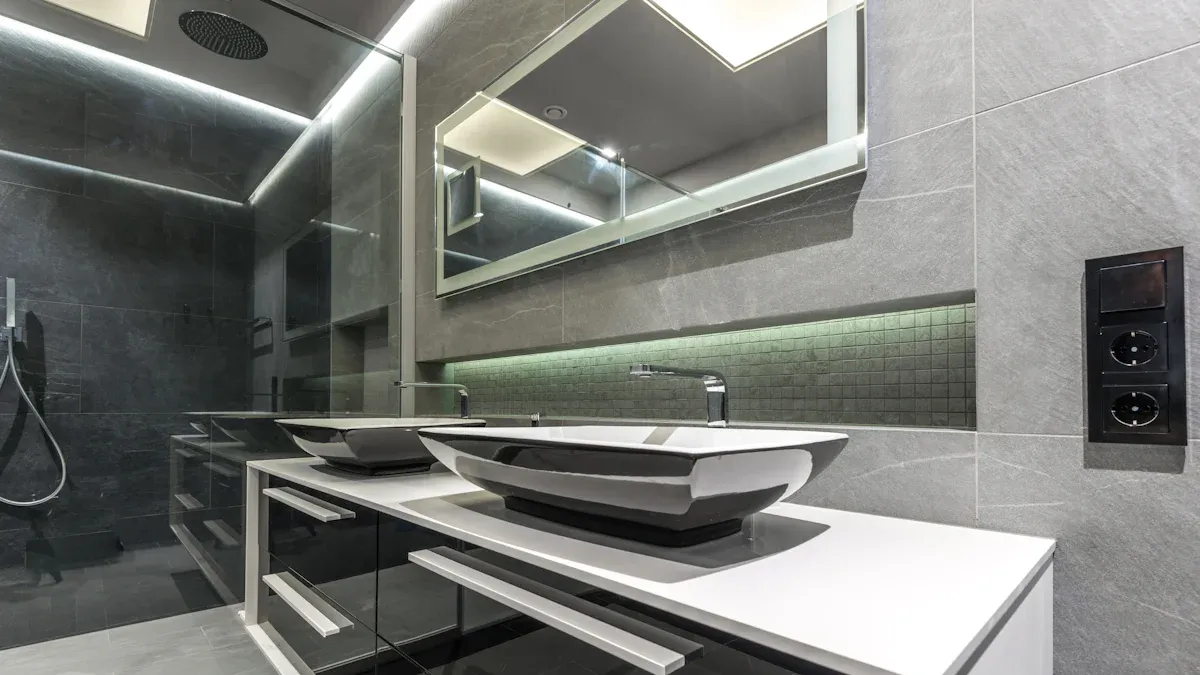
Customization is crucial for global sanitary brands. It allows them to create products that stand out. This section explores the key customization options for a Zinc Alloy Kitchen and Bathroom Decorative Cover. These options ensure optimal performance, aesthetic appeal, and seamless integration.
Material Composition and Alloys for Optimal Performance
The choice of material composition and alloys directly impacts a product’s performance. Manufacturers carefully select these elements to meet specific demands.
Tailoring for Enhanced Durability and Longevity
Zinc alloys offer superior durability and longevity. They commonly consist of zinc mixed with either aluminum or copper. These combinations provide exceptional strength. For example, zinc offers greater strength compared to aluminum. This means components can last up to five times longer. Zinc alloys also have superior dimensional stability. They show high impact strength and an exceptional strength-to-weight ratio. Their hexagonal close-packed crystal form at ambient temperature further contributes to their durability. These properties ensure products withstand daily use and last for many years.
Optimizing Corrosion Resistance for Moisture-Prone Environments
Corrosion resistance is vital in moisture-prone environments like kitchens and bathrooms. Zinc alloys provide excellent corrosion resistance. This quality prevents rust and extends the product’s lifespan. It is especially important when used for galvanizing steel. The material also shows resilience against harsh weather. This makes it suitable for various applications.
Selecting Specific Alloys for Environmental Demands
Manufacturers select specific alloys based on environmental demands. Zamak is a significant zinc alloy used for household items. Specific Zamak compositions, such as Zamak 3 and Zamak 5, are common. Their exact composition dictates properties like strength, hardness, and casting characteristics. This careful selection ensures the final product performs optimally in its intended environment.
Design and Aesthetic Versatility
Custom zinc covers offer extensive design and aesthetic versatility. This allows brands to create unique and visually appealing products.
Exploring Custom Patterns, Logos, and Textures
Brands can explore custom patterns, logos, and textures. Custom panel fabrication allows for specific aesthetic and functional needs. This includes intricate designs like perforated patterns or embossed textures. Companies can also incorporate their logos directly onto the covers. This creates a strong brand identity. Zinc can also combine with other materials like wood, glass, or concrete. These combinations create visual contrasts and enhance the overall design.
Applying Diverse Finishes: Polished, Brushed, Matte, and PVD Coatings
Diverse finishes enhance the appearance and performance of zinc covers. Options include polished, brushed, and matte finishes. Brushing is a process applied to zinc and zinc-alloy materials. It enhances coating adherence and eliminates minor casting defects. This improves the surface quality before plating or painting. Physical Vapor Deposition (PVD) coatings offer significant advantages. They are often harder and more corrosion-resistant than electroplated coatings. PVD coatings possess high temperature and good impact strength. They also exhibit excellent abrasion resistance and are highly durable. This often removes the need for protective topcoats. PVD is also more environmentally friendly than traditional coating methods. However, some PVD technologies require specialized attention due to high temperatures and vacuums. They also need a cooling water system.
Incorporating Unique Geometries and Visual Elements
Manufacturers incorporate unique geometries and visual elements into zinc covers. This includes various styles, such as standing seam and interlocking shingles for certain applications. Zinc is also used for accent walls, backsplashes, and other interior applications. The material offers a wide range of colors, from warm bronze to cool blue shades. Textures and finishes like Natural Zinc (a soft, matte silvery look with an evolving patina), Pre-weathered Zinc (an accelerated patina for a vintage appearance), and Coated Zinc (a protective finish for durability and color consistency) provide further options.
Size and Shape Variations for Seamless Integration
Custom zinc covers offer precise size and shape variations. This ensures seamless integration into any fixture or design.
Manufacturing to Exact Dimensions and Specifications
Manufacturers produce zinc covers to exact dimensions and specifications. They use advanced processes like net shape casting. This method creates parts close to their final shape, reducing waste. Custom cutting services provide specific lengths, widths, and even tapered shapes. This is useful for unique architectural elements. A range of thicknesses, from thin foil-like sheets (e.g., 34 GA) to heavy-duty options (e.g., 15 GA), is available. This allows for both decorative and structural purposes. Custom roll forming, metal sheet cutting, and shearing processes also ensure precise dimensions.
Creating Unique Geometries for Non-Standard Fixtures
Custom metal fabrication provides parts in shapes, sizes, angles, and configurations not typically available elsewhere. This versatility is crucial for non-standard fixtures. For example, the Soffi-Steel® System is custom-designed and fabricated for unique applications. It comes in various shapes and sizes, such as L-Shield and U-Shield configurations. These can be manufactured to required dimensions, ranging between 3 inches and 60 inches, and up to 10 feet in length. This ensures a perfect fit for specialized designs.
Accommodating Universal Compatibility with Standard Fixture Bases
While customization allows for unique designs, it also accommodates universal compatibility. Precise manufacturing ensures custom covers integrate smoothly with standard fixture bases. This means brands can offer unique designs that still fit common plumbing or hardware standards. This balance of customization and compatibility provides flexibility for global sanitary brands.
Functional Enhancements and Smart Integrations
Custom zinc covers offer more than just aesthetic appeal. They also provide significant functional enhancements and allow for smart integrations. These features improve usability, safety, and overall performance in various settings.
Integrating Specialized Locking Mechanisms and Ventilation
Manufacturers can integrate specialized locking mechanisms into custom zinc covers. These mechanisms provide enhanced security for fixtures. They prevent tampering or unauthorized access. Ventilation features can also be part of the design. Proper ventilation helps manage moisture and airflow in enclosed spaces. For example, a Zinc Alloy Kitchen and Bathroom Decorative Cover might feature a specialized locking mechanism for security or integrated ventilation for specific applications. Zinc alloy faucet hole covers, often categorized under ‘others’, cater to niche applications and specialized requirements. These include matching specific sink materials or achieving unique design aesthetics. Manufacturers in this segment often focus on limited-edition designs and collaborations with designers to create exclusive products. This appeals to discerning customers seeking customized solutions and personalization.
Designing for Sensor Compatibility and Hygienic Guards
Designers create zinc covers to work seamlessly with modern sensor technology. This enables touchless operation for faucets or dispensers. Touchless features improve hygiene, especially in public or high-traffic areas. Hygienic guards can also be part of the cover’s design. These guards prevent the spread of germs and maintain cleanliness. They offer an added layer of protection for users.
Ensuring Load Capacity and Structural Integrity
Engineers design custom zinc covers to meet specific load capacity requirements. They ensure the covers can withstand the intended weight and pressure. This is crucial for floor drains or heavy-duty applications. Structural integrity is also a key consideration. Manufacturers use robust designs and materials to ensure the covers remain strong and stable over time. This guarantees safety and long-term durability.
Surface Treatments and Protective Coatings
Surface treatments and protective coatings significantly enhance the performance and appearance of zinc covers. They provide durability, corrosion resistance, and improved hygiene.
Applying Multi-Layered PVD Coatings for Lasting Protection
Multi-layered Physical Vapor Deposition (PVD) coatings offer lasting protection for zinc covers. These coatings make surfaces harder and more resistant to scratches. They also provide superior corrosion resistance, which is essential in moisture-rich environments. PVD coatings withstand high temperatures and impacts. They exhibit excellent abrasion resistance and are highly durable. This often removes the need for additional protective topcoats. PVD is also an environmentally friendly coating method.
Enhancing Appearance with Decorative and Antimicrobial Layers
Coatings do more than protect; they also enhance appearance. Brands can choose from various decorative finishes. These include polished, brushed, or matte looks. Coatings can also add antimicrobial properties to the surface. These special layers inhibit the growth of bacteria and other microorganisms. This helps maintain a cleaner and more hygienic environment.
Improving Hygiene with ISO 22196 Certified Coatings
Some coatings specifically improve hygiene. These coatings meet stringent international standards, such as ISO 22196. An ISO 22196 certified coating effectively inhibits 99.2% of bacterial growth. This significantly reduces the presence of harmful microbes on the cover’s surface. Such coatings are particularly valuable in healthcare, hospitality, and public restroom settings. They contribute to a safer and healthier user experience. Other common surface treatments for zinc include:
- Hot-dip galvanizing (batch or continuous)
- Electroplating (zinc plating)
- Metallizing (zinc spraying)
- Mechanical plating
- Zinc-rich paint
Electroplating involves creating a galvanic cell. The part to be plated acts as the cathode. The plating material acts as the anode. Both immerse in an electrolyte bath with direct current applied. This process can apply less noble metals like zinc to serve as a sacrificial anode. This protects the more noble substrate. Hot-dipping is another method for applying zinc coatings. It results in a thicker, more protective layer. Electroless plating, typically using nickel, applies a coating without electric current. The substrate acts as a catalyst for the chemical deposition of nickel ions. This produces uniform and dense coatings. Chemical coatings include phosphoric acid washes for limited oxidation resistance and black oxide for corrosion protection on various metals.
The Customization Process: From Concept to Production of Zinc Alloy Kitchen and Bathroom Decorative Covers
Initial Consultation and Design Brief
The customization journey begins with a thorough initial consultation. Brands define their specific needs and share their vision for the product. They also provide technical specifications. This step establishes the project’s scope. It also sets clear performance criteria. This ensures the final product meets all expectations.
Defining Brand Needs, Vision, and Technical Specifications
Manufacturers work closely with brands to understand their unique requirements. They translate brand vision into tangible design elements. This includes material choices, finish preferences, and functional demands. Detailed technical specifications guide the entire production process.
Establishing Project Scope and Performance Criteria
Teams clearly define the project’s boundaries. They establish key performance indicators. These criteria might include durability, corrosion resistance, load capacity, or specific aesthetic outcomes. This upfront planning ensures alignment between the brand’s goals and the manufacturer’s capabilities.
Prototyping and Sample Approval
After the initial design, prototyping and sample approval become crucial. This phase ensures design accuracy and functional fit. Engineers review the design print. They assess its feasibility as a casting. They identify concerns like thin walls or mechanical properties. Mold flow simulation helps address manufacturability issues. It predicts air entrapment or how the part will heat and cool. This prevents warping.
Ensuring Design Accuracy and Functional Fit
Various prototype methods exist. Machined castings offer mechanical potential. Low-pressure die casting allows complex geometries. 3D printed prototypes show appearance. High-pressure die casting prototypes best represent performance. This involves investing in tooling. It runs production die castings on a real machine. Collaboration between the customer’s engineering team and the manufacturer’s engineers is vital. This ensures designs meet expectations. It allows for feedback and subtle changes. This improves performance, especially for mating parts. This process allows clients to test designs early. It verifies galvanizing performance. It ensures engineering accuracy. It identifies potential design issues. It confirms coating compatibility and target zinc thickness. It checks edge coverage, drainage points, and overall surface finish. This gives clients confidence in long-term component reliability.
Facilitating Client Feedback and Iterative Refinement
Manufacturers actively seek client feedback during the prototyping stage. This iterative process allows for necessary adjustments. It refines the design until it perfectly matches the brand’s vision and functional requirements. This collaborative approach minimizes errors before mass production.
Manufacturing and Quality Control
Manufacturing and quality control ensure the final product meets high standards. Manufacturers adhere to global standards and brand-specific requirements. The Joint Due Diligence Standard (JDDS) applies to the zinc supply chain. It covers facilities processing material from mine sites. ASTM International established standard B989 for high fluidity zinc-aluminum alloy. This standard ensures excellent die castability. RHEINZINK adheres to environmental management concepts. Its products align with ISO 14025 type III and EN 15804. They are not subject to REACH regulation. RHEINZINK also holds Cradle to Cradle certification. These certifications ensure environmental responsibility.
Adhering to Global Standards and Brand-Specific Requirements
Manufacturers implement rigorous testing protocols. They perform comprehensive inspections at every stage. They measure size and inspect surfaces for flaws. This ensures parts are precise, robust, and durable. A Coordinate Measurement Machine (CMM) validates dimensions. It uses customer drawings and specifications. Individualized inspection plans are established for each part number. Quality control integrates across all departments. It starts with quoting and planning. It continues through production with roving inspectors. It ends with a final audit. Manufacturers solicit customer feedback annually. They follow standard procedures for corrective and preventative actions. ISO 9001:2015 certification ensures adherence to international quality standards.
Implementing Rigorous Testing Protocols (e.g., ASTM B117 Salt Spray)
Rigorous testing protocols validate product performance. This includes tests like the ASTM B117 salt spray test. This test assesses corrosion resistance. It ensures the Zinc Alloy Kitchen and Bathroom Decorative Cover withstands harsh environments. Other specialized equipment, such as optical comparators and precision gauges, ensures dimensional accuracy and structural integrity.
Logistics and Global Distribution
Global sanitary brands require robust logistics for their custom zinc covers. Efficient delivery and transparent supply chains are essential. They ensure products reach customers worldwide. This process also involves careful management of international shipping and customs.
Ensuring Efficient Delivery and Supply Chain Transparency Worldwide
Brands must ensure efficient delivery and transparent supply chains globally. They use advanced technology and fulfillment platforms. These systems streamline logistics, inventory, and order management. They offer real-time tracking and automated order processing. Optimized shipping routes also improve delivery times. Brands leverage global warehouse networks and established logistics infrastructure. This enables scalable growth. It helps them adapt to market fluctuations or new market entries. This approach avoids internal complexity and costs.
Expert risk management and compliance handling are also crucial. This includes real-time inventory tracking and quality checks. Protective packaging and secure handling prevent damage. Brands manage import/export regulations, customs laws, tariffs, and taxes. They also handle certifications. Contingency planning helps manage disruptions like delays or natural disasters. Identifying reliable transportation partners with international shipping experience is vital. Choosing the right mode of transport, like air or sea, depends on product type and urgency. Effective inventory management meets demand without excessive storage costs. Technology helps track shipments and monitor inventory.
Managing International Shipping and Customs Compliance
Managing international shipping and customs compliance is complex. Several key regulatory bodies oversee this process. The Bureau of Industry and Security (BIS) handles Export Administration Regulations (EAR) for commercial items. The Directorate of Defense Trade Controls (DDTC) manages International Traffic in Arms Regulations (ITAR) for defense articles. Customs and Border Protection (CBP) enforces these regulations at borders.
Export compliance requires several steps. These include export licensing for items with military applications or advanced technology. Embargoes and sanctions prohibit trade with certain countries. Recordkeeping is necessary for transaction records, typically for five years. End-use and end-user controls restrict exports for prohibited uses or to prohibited parties. Ensuring compliance involves product classification, such as the Commerce Control List (CCL) or US Munitions List (USML). Know Your Customer (KYC) due diligence is also important. Companies must provide compliance training for employees. They need robust record-keeping systems.
Zinc oxide, a component in some zinc products, is classified as a Class 9 hazardous material. This requires specific transport and declaration regulations. For a Zinc Alloy Kitchen and Bathroom Decorative Cover, companies must prepare necessary documents. These include a Bill of Lading (B/L), Commercial Invoice, and Packing List. A Customs Declaration and Certificate of Origin (COO) are also required. An HS Code, like 26201900 or 28170010 for zinc ash, is crucial for duty calculations. China Customs may inspect shipments for metal content and environmental safety. They also check hazardous material classification. Brands should expect import duties, VAT, and potential environmental taxes. Working with a reliable customs broker helps resolve common issues like delays or HS Code discrepancies.
Case Studies: Successful Custom Zinc Alloy Kitchen and Bathroom Decorative Cover Implementations
Global sanitary brands achieve significant success through custom zinc cover implementations. These case studies demonstrate how tailor-made solutions, including the versatile Zinc Alloy Kitchen and Bathroom Decorative Cover, meet diverse market demands. They also highlight how these solutions enhance brand value across various sectors.
Luxury Bathroom Fixtures
Luxury brands leverage custom zinc covers to create exclusive and high-end bathroom environments. These covers become integral design elements.
Achieving Premium Aesthetics and Exclusive Designs
Custom zinc covers allow luxury brands to achieve unparalleled aesthetics. Designers craft intricate patterns, unique textures, and bespoke finishes. These elements transform functional components into works of art. For instance, a polished gold PVD coating on a custom drain cover elevates the entire bathroom’s visual appeal. Brands create a distinctive look that resonates with discerning clients.
Enhancing High-End Brand Perception and Market Value
Exclusive designs and premium finishes significantly enhance a brand’s perception. Consumers associate custom zinc covers with quality, sophistication, and attention to detail. This elevates the brand’s market value. It also allows brands to command higher price points for their luxury offerings.
Commercial Restroom Solutions
Commercial settings demand robust and highly functional solutions. Custom zinc covers meet these rigorous requirements.
Ensuring Robust Durability and Specific Functional Performance
Commercial restrooms experience heavy use. Custom zinc covers offer exceptional durability. Manufacturers design them to withstand constant wear and tear. They also incorporate specific functional features. These include enhanced anti-slip surfaces for safety or specialized drainage systems for efficient water management. This ensures long-lasting performance in demanding environments.
Optimizing for High-Traffic Environments and Longevity
Longevity is crucial in high-traffic commercial spaces. Custom zinc covers reduce maintenance needs and replacement costs. Their robust construction and corrosion-resistant properties ensure they maintain their appearance and function over many years. This optimizes operational efficiency for businesses.
Public Infrastructure Projects
Public infrastructure projects require adherence to strict standards and complex specifications. Custom zinc applications prove invaluable in these settings.
Meeting Stringent Safety and Design Standards
Public spaces demand the highest safety and design standards. Custom zinc covers meet these stringent requirements. They provide durable, safe, and aesthetically pleasing solutions. These solutions integrate seamlessly into public utility designs.
Adhering to Complex Specifications for Public Utility
Custom zinc applications often address complex specifications for public utility. For example, the Christ Church Cathedral in Vancouver, British Columbia, underwent a significant renovation. This project included a re-roofing with approximately 12,000 square feet of RHEINZINK-prePATINA® blue-grey. Installers used a traditional batten seam profile. They hand-formed panels, highlighting the custom nature of the zinc application. The project involved complex detailing and multiple interfacing without caulking or screws. The drainage system also featured traditional 6-inch half-round gutters and hangers. A bell spire housing four custom-cast bronze bells further demonstrated custom elements. Other custom zinc components in public infrastructure include:
- Sheet Metal Beam Caps: These protect and reinforce structural beams from environmental elements and corrosion. They also add structural integrity and aesthetic appeal.
- Column Caps: Similar to beam caps, these protect the tops of vertical building supports. They prevent water ingress and maintain structural integrity.
- Connector Plates: These join wooden trusses or beams. They provide stability and prevent separation between connected members.
Hospitality and Healthcare Applications
Custom zinc covers play a vital role in hospitality and healthcare settings. They meet the unique demands of these environments. These applications require a strong focus on hygiene, cleanliness, and specific design integration.
Prioritizing Hygiene, Cleanliness, and Accessibility Features
Hospitality and healthcare environments demand exceptional hygiene and cleanliness. Custom zinc covers address these critical needs effectively. They feature antimicrobial coatings. These coatings inhibit 99.2% of bacterial growth, as certified by ISO 22196 standards. This significantly reduces germ spread on surfaces. Manufacturers design the covers with smooth, non-porous surfaces. This makes cleaning and sanitization easy. They resist common disinfectants. This ensures a sterile environment.
Furthermore, these covers integrate accessibility features. Non-slip textures prevent accidents in wet areas. Clear visual indicators assist users with impaired vision. Touchless designs also improve sanitation. They minimize physical contact with fixtures. These combined features ensure safety and health for guests and patients.
Integrating Specific Interior Designs and Brand Aesthetics
Hospitality and healthcare spaces often feature distinct interior designs. Custom zinc covers seamlessly integrate with these specific aesthetics. Brands select unique finishes. They choose from polished, brushed, or matte options. PVD coatings offer a wide range of colors. This allows for perfect color matching with existing decor. For example, a luxury hotel might choose polished gold covers. A modern clinic might prefer matte black.
Designers also incorporate custom patterns or logos. This reinforces brand identity. Unique geometries fit specialized fixtures. This creates a cohesive and sophisticated look. This attention to detail elevates the perceived quality of the establishment.
Tailor-made zinc covers offer powerful tools for global sanitary brands. They provide differentiation, functional excellence, and brand reinforcement. Customization elevates products. It meets diverse market demands. This solidifies a brand’s market position. Custom zinc covers significantly contribute to brand identity. They also boost market competitiveness. Brands achieve unique product differentiation. They meet precise market demands effectively.
FAQ
What advantages do custom zinc covers offer global sanitary brands?
Custom zinc covers provide unique product differentiation. They help brands meet precise market demands. These covers enhance brand identity and offer functional excellence. They also allow adaptation to global aesthetic trends.
How do custom zinc covers enhance brand identity?
Custom zinc covers create a unique visual signature. Brands incorporate custom designs, patterns, and logos. This helps products stand out in competitive markets. It reinforces brand values and aesthetic principles.
What functional requirements can custom zinc covers meet?
Custom zinc covers address diverse anti-slip and drainage needs. They integrate advanced security features. They also offer performance enhancements. These covers ensure optimal functionality in various environments.
What customization options are available for material composition?
Brands can tailor zinc alloy composition for enhanced durability. They optimize corrosion resistance for moisture-prone areas. Manufacturers select specific alloys to meet environmental demands. This ensures optimal product performance.
Can custom zinc covers integrate smart features?
Yes, custom zinc covers integrate specialized locking mechanisms and ventilation. They design for sensor compatibility and hygienic guards. These covers also ensure high load capacity and structural integrity.
How does the customization process work from concept to production?
The process begins with an initial consultation and design brief. It moves to prototyping and sample approval. Then, manufacturing and quality control follow. Finally, logistics and global distribution complete the process.
What testing protocols ensure the quality of custom zinc covers?
Manufacturers implement rigorous testing protocols. These include the ASTM B117 salt spray test. This test assesses corrosion resistance. It ensures the covers withstand harsh environments and meet high standards.
Are custom zinc covers suitable for high-traffic commercial environments?
Yes, custom zinc covers offer robust durability. They provide specific functional performance. Manufacturers optimize them for high-traffic environments. This ensures longevity and reduces maintenance needs.