
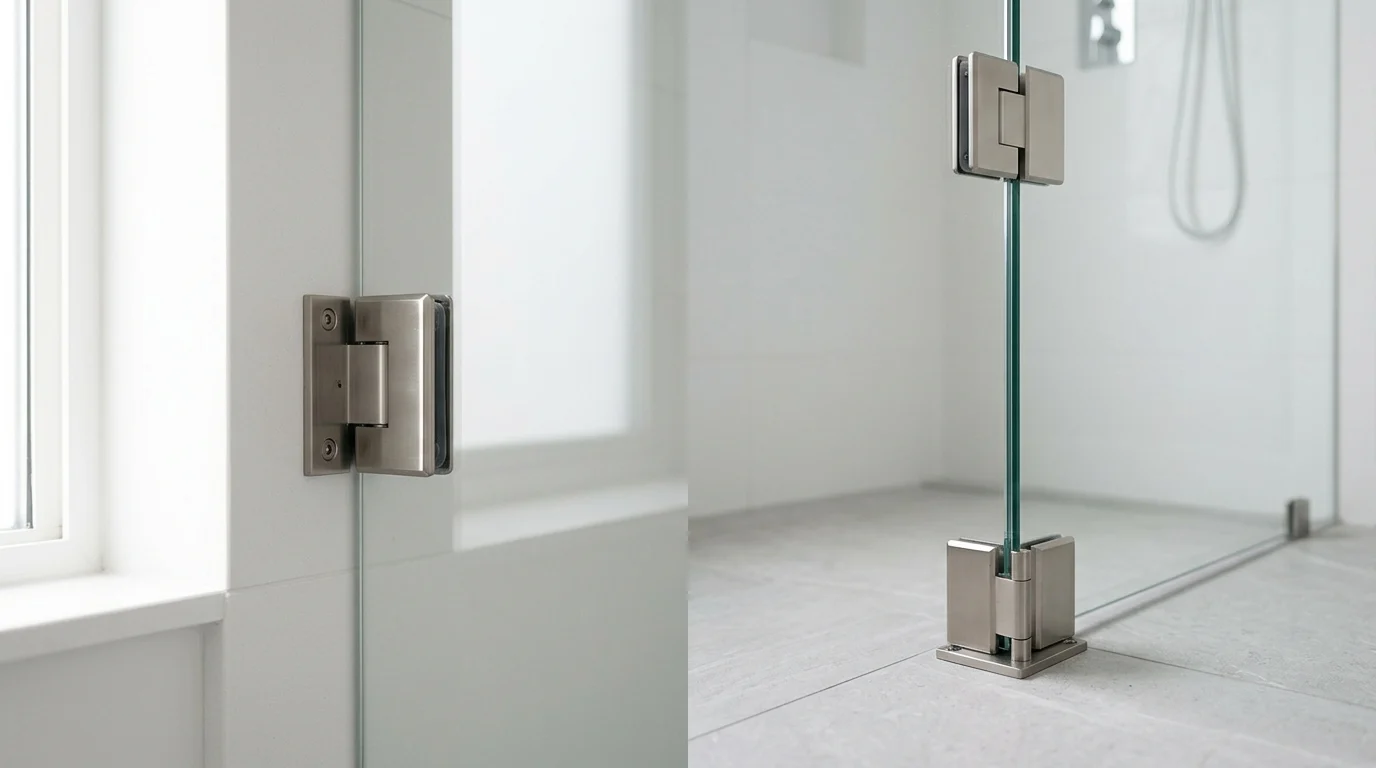
Choosing shower door hinges affects more than how a door opens and closes; it influences support, alignment, sealing, and the overall look of a frameless enclosure. This comparison explains how wall-mounted and floor-mounted hinges differ in load handling, installation requirements, and space constraints, so you can match the hardware to the glass thickness, substrate, and bathroom layout. By understanding the practical tradeoffs before specifying hardware, you can avoid common fit issues and choose a hinge system that performs reliably while meeting the design goals of the shower.
Wall-Mounted vs Floor-Mounted Shower Door Hinges
In the specification of frameless glass shower enclosures, the selection of hinge hardware represents a critical intersection of architectural aesthetics, structural engineering, and spatial geometry. Engineers and architectural hardware consultants must evaluate the enclosure’s design intent against the mechanical realities of the installation environment.
The primary debate centers on wall-mounted versus floor-mounted (pivot) shower door hinges. Each hardware typology dictates a distinct load path, requires specific glass fabrication tolerances, and imposes unique constraints on the surrounding substrate. Understanding these mechanics is paramount for ensuring long-term structural integrity and minimizing the risk of catastrophic glass failure.
Definitions and structural differences
Wall-mounted hinges are mechanical clamps secured directly to the vertical substrate, suspending the glass door from its side edge. These units typically feature a central pivot pin mechanism integrated into the clamping plates. Standard applications utilize two hinges for doors up to 78 inches in height, while taller enclosures may necessitate a third hinge to prevent door deflection.
Floor-mounted hinges, commonly referred to as pivot hinges, anchor to the floor or curb threshold at the bottom and a corresponding header or ceiling at the top. Rather than clamping the vertical edge, these hinges support the door at the top and bottom corners, effectively transforming the glass panel into a structural column that rotates on a vertical axis.
Hinge type, load path, and opening performance
The structural mechanics of wall-mounted hinges involve transferring shear and pull-out forces laterally into the wall framing. This creates a cantilevered load where the operational torque is concentrated at the wall anchors. Consequently, the opening performance is heavily dependent on the rigidity of the wall; these hinges typically offer a 90-degree outward swing or a 135-degree bi-directional swing, depending on the hinge block machining.
Floor-mounted pivot hinges transfer the dead weight of the glass vertically into the floor structure, drastically reducing lateral pull-out stress on adjacent walls. This vertical load path allows for significantly smoother operation under heavy loads. Pivot systems frequently enable a full 180-degree swing (inward and outward), which enhances operational fluidity and reduces strain on the hinge mechanisms during sudden stops.
When each option is typically used
Wall-mounted systems are the industry standard for inline shower enclosures, corner units, and neo-angle layouts where adequate structural wood or steel blocking is guaranteed within the wall cavity. They are highly favored in hospitality and residential applications where a minimalist, continuous glass edge is desired without the visual interruption of top headers.
Floor-mounted pivots are typically specified when site conditions preclude lateral structural support, such as installations against non-load-bearing partition walls, glass block substrates, or existing tile over unreinforced drywall. Furthermore, pivot hinges are the preferred engineering solution for oversized, heavy custom doors that exceed the lateral shear capacity of standard wall anchors.
Technical Factors for Comparing Shower Door Hinges
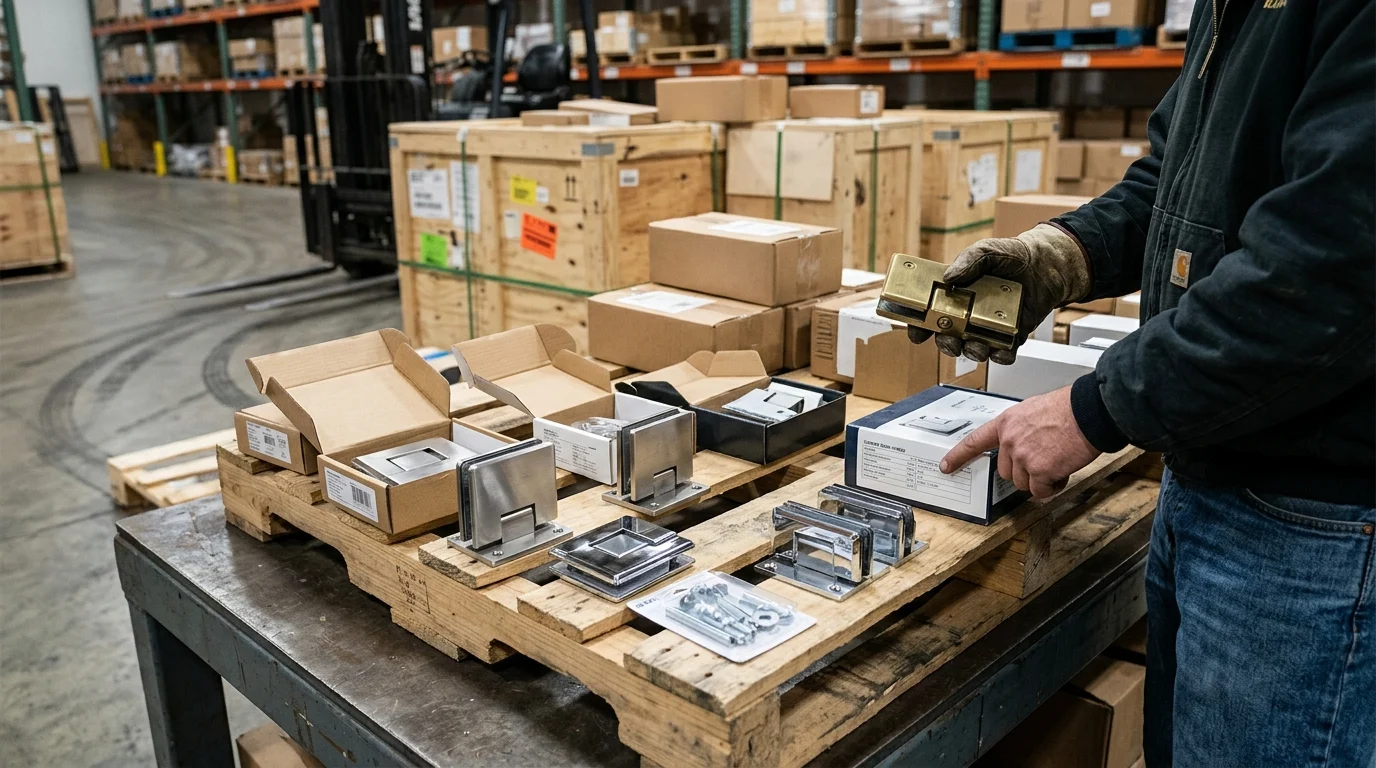
A rigorous technical evaluation is essential when determining whether a wall-mounted or floor-mounted hinge system is appropriate for a specific enclosure. Hardware specification cannot rely solely on aesthetic preferences; it must be driven by empirical data regarding material limits and environmental stressors.
Key technical factors include the mass of the monolithic tempered glass, the metallurgical composition of the hardware, and the anticipated maintenance lifecycle. Failure to accurately calculate these variables can result in hinge sag, clamping gasket failure, or severe galvanic corrosion in the humid microclimate of a shower.
Door weight, glass thickness, and load capacity
The primary constraint in hinge specification is the dead load of the glass panel. Standard 3/8-inch (10mm) tempered glass weighs approximately 4.9 pounds per square foot, whereas premium 1/2-inch (12mm) glass weighs roughly 6.4 pounds per square foot. A standard 28-inch by 72-inch door fabricated from 1/2-inch glass yields a dead weight exceeding 90 pounds, which pushes the upper operational limits of standard dual wall-mounted hinge configurations.
Wall-mounted hinges typically feature a maximum load capacity of 80 to 100 pounds per pair, requiring a third hinge for heavier panels to mitigate lateral shear stress. In contrast, heavy-duty floor-mounted pivot hinges efficiently transfer weight vertically into the substrate, commonly supporting capacities of 120 to 150 pounds with only a top and bottom pivot.
| Hinge Typology | Glass Thickness Compatibility | Max Weight Capacity (Dual Setup) | Primary Load Direction |
|---|---|---|---|
| Standard Wall-Mounted | 5/16″ to 1/2″ | 80 – 100 lbs | Lateral / Shear |
| Heavy-Duty Wall-Mounted | 3/8″ to 1/2″ | 100 – 120 lbs | Lateral / Shear |
| Standard Floor Pivot | 3/8″ to 1/2″ | 100 – 120 lbs | Vertical / Compression |
| Heavy-Duty Floor Pivot | 1/2″ to 5/8″ | 130 – 150+ lbs | Vertical / Compression |
Corrosion resistance, finish quality, and durability
Shower environments subject hardware to continuous thermal cycling, high humidity, and aggressive chemical exposure from cleaning agents and municipal water chlorides. Consequently, the metallurgical grade of the hinge is paramount. Solid forged brass is widely utilized due to its excellent machinability, structural density, and superior adhesion properties for electroplated finishes such as polished chrome or matte black.
For severe environments, including coastal installations or commercial steam rooms, 316L stainless steel is often specified. The addition of molybdenum in 316L provides a Pitting Resistance Equivalent Number (PREN) exceeding 23, offering exceptional defense against chloride-induced stress corrosion cracking. Regardless of the base metal, the finish quality must meet stringent salt spray testing standards (e.g., ASTM B117) to ensure long-term durability without blistering or flaking.
Maintenance, safety, and long-term reliability
Long-term reliability hinges on the mechanical fatigue limits of the internal components. Wall-mounted hinges rely on internal tension springs and neoprene or EPDM clamping gaskets. Over 10,000 to 20,000 thermal and operational cycles, these gaskets can experience compression set, leading to micro-slippage of the glass panel. Routine maintenance requires re-torquing the clamping screws to factory specifications.
Floor-mounted pivot hinges utilize precision bearing assemblies that bear the entire vertical load. While these bearings provide exceptionally smooth operation, the floor-level installation makes them susceptible to calcium and lime scale accumulation from water runoff. Maintenance protocols for floor hinges prioritize keeping the bottom pivot clearance free of mineral buildup to prevent abrasive wear on the bearing surfaces, ensuring safety and operational longevity.
Site Conditions, Compliance, and Installation Requirements
The feasibility of either hinge system is fundamentally dictated by the physical realities of the installation site. Architectural hardware consultants must evaluate the structural integrity of the surrounding envelope, the precision of the substrate construction, and the regulatory framework governing the project.
Site conditions often override initial design specifications. A comprehensive assessment of wall plumbness, floor levelness, waterproofing details, and labor constraints is required to mitigate installation failures and control unexpected project costs.
Substrate conditions, alignment tolerances, and waterproofing
Wall-mounted hinges demand robust substrate preparation. The framing must include double 2×4 or 2×6 solid wood blocking precisely at the anticipated hinge elevations, as standard wall anchors cannot support dynamic shear loads in hollow drywall or cement board. Furthermore, the fasteners must penetrate the structural blocking by a minimum of 1.5 inches. If the finished tile walls are out of plumb by more than 1/4 inch over a 72-inch vertical span, wall-mounted hinges will bind during operation, necessitating custom out-of-square glass fabrication.
Floor-mounted hinges are substantially more forgiving regarding out-of-plumb walls, as the pivot axis is established independently between the floor and ceiling or header. However, they require absolute floor levelness at the anchor point. A critical consideration for floor-mounted systems is the penetration of the waterproof membrane; installers must utilize specialized sealants and anchoring techniques to ensure the curb or pan remains impervious to water intrusion after the bottom pivot is bolted into the substrate.
Code compliance and accessibility considerations
Commercial and multi-family residential projects must navigate stringent accessibility codes. The Americans with Disabilities Act (ADA) mandates a minimum clear opening width of 32 inches and restricts the maximum door opening force to 5 pounds. Floor-mounted pivot hinges, due to their vertical load distribution and low-friction bearings, often excel in meeting these low-force requirements even with heavy, oversized doors.
Additionally, building codes require compliance with safety glazing standards, such as ANSI Z97.1 and CPSC 16 CFR 1201, which dictate the use of tempered safety glass. Both hinge styles must be engineered to securely clamp or support tempered glass without inducing localized stress concentrations that could trigger spontaneous breakage. Pivot hinges inherently reduce these stress points by eliminating lateral clamping torque on the glass edge.
Material, labor, and service cost drivers
The total installed cost varies significantly between the two systems. Wall-mounted hinges are generally less expensive per unit, with commercial-grade brass fixtures ranging from $40 to $80 each. However, they require complex CNC glass fabrication, including precise ‘mouse-ear’ or square cutouts, which elevates the manufacturing cost of the glass panel itself.
Conversely, heavy-duty floor-mounted pivot assemblies command a higher initial hardware premium, often ranging from $100 to $250 per set. This hardware cost is partially offset by simpler glass fabrication requirements, as pivot hinges typically only require straightforward top and bottom edge notches. Labor costs also differ; wall-mounted installations demand precise vertical alignment of multiple anchors, whereas pivot hinges require meticulous plumb alignment between the top and bottom pivot points.
How to Choose the Right Shower Door Hinge
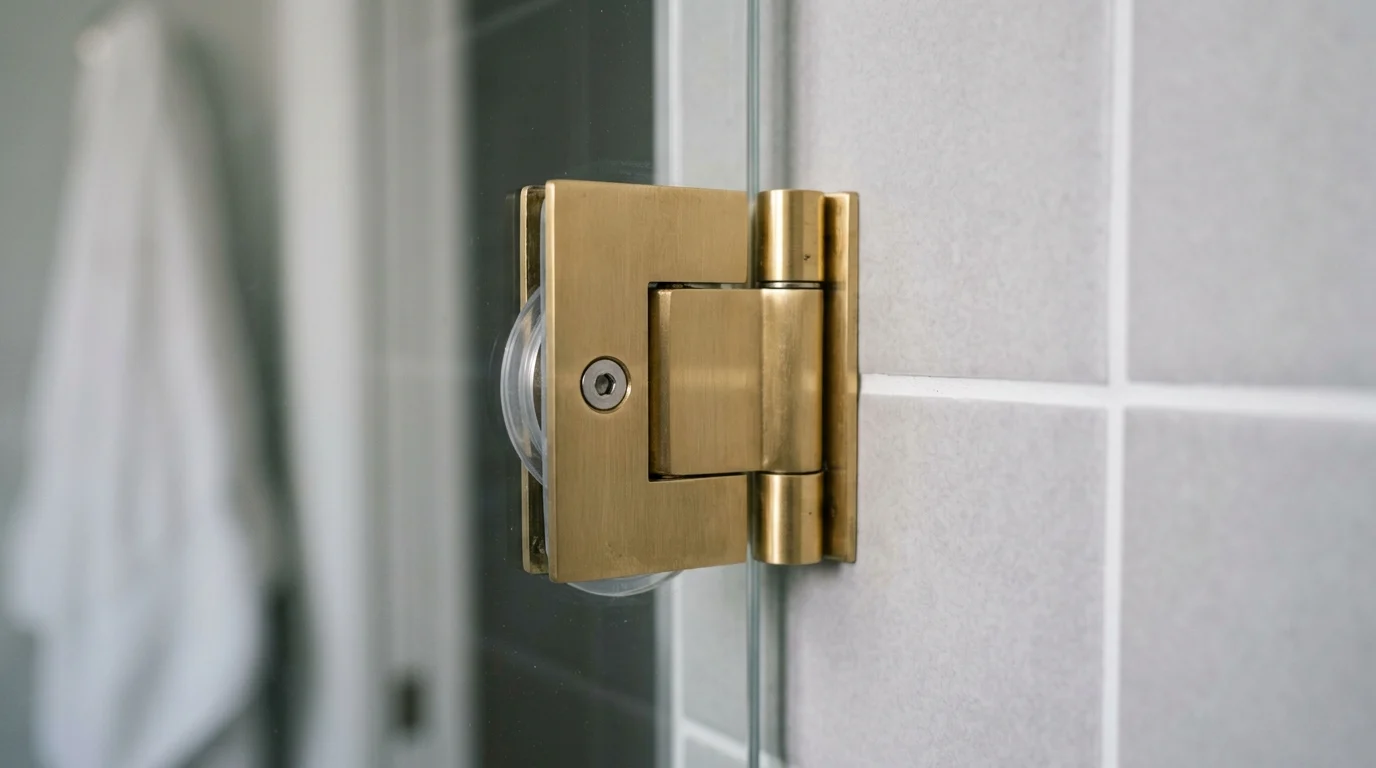
Selecting the optimal shower door hinge requires synthesizing structural calculations, site evaluations, and project-specific objectives. A systematic approach to specification prevents costly hardware failures and ensures the final installation aligns with both aesthetic expectations and performance mandates.
Architects, contractors, and procurement teams must collaborate to establish clear decision criteria, rigorously vet hardware specifications against manufacturing standards, and enforce strict quality-control protocols during final installation.
Decision criteria by project type
Decision criteria pivot heavily on the project typology. In high-volume commercial hospitality environments, standard wall-mounted hinges are frequently specified due to their lower unit cost, ease of inventory standardization, and simplified replacement procedures. Maintenance staff can easily swap a worn wall hinge without dismantling the entire enclosure.
In contrast, custom luxury residential projects and high-end executive suites often prioritize uninterrupted sightlines and monumental door sizes. In these scenarios, floor-mounted pivot hinges are the preferred solution. Their ability to support floor-to-ceiling glass panels weighing upwards of 130 pounds allows designers to execute frameless, minimalist aesthetics that wall-mounted systems structurally cannot achieve.
Specification and procurement checks
Procurement teams must enforce rigorous specification checks prior to purchasing. Critical documentation includes independent laboratory testing for cycle life—commercial installations should specify hinges tested to a minimum of 50,000 operational cycles without mechanical degradation. Additionally, buyers must verify the Minimum Order Quantities (MOQ) and lead times for custom-plated finishes, which can extend from 4 to 12 weeks depending on the manufacturer.
| Specification Check | Wall-Mounted Hinge | Floor-Mounted Pivot Hinge |
|---|---|---|
| Structural Blocking Verification | Mandatory (Double 2×4 minimum) | Not required for lateral walls |
| Glass Fabrication Precision | High (Complex interior cutouts) | Moderate (Edge notches) |
| Membrane Penetration Risk | Low (Anchored to vertical walls) | High (Requires specialized floor sealing) |
| Cycle Testing Standard | > 50,000 cycles | > 50,000 cycles |
| Ideal Application | Standard residential, hospitality | Luxury custom, oversized enclosures |
Quality-control and installation review
The final phase of the selection process involves rigorous quality-control during installation. Installers must utilize calibrated torque wrenches to secure the clamping screws; standard specifications dictate 40 to 50 inch-pounds of torque. Over-tightening risks crushing the clamping gaskets and inducing stress fractures in the glass, while under-tightening inevitably leads to panel slippage.
A comprehensive post-installation review must confirm precise gasket compression, verify that absolutely no glass-to-metal contact exists within the hinge block, and validate that the operational swing is smooth and free of binding. By adhering to these stringent review protocols, contractors ensure that the chosen hinge system—whether wall-mounted or floor-mounted—delivers optimal performance, safety, and longevity.
Key Takeaways
- The most important conclusions and rationale for How to Choose the Right Shower Door Hinges: Wall-Mounted vs Floor-Mounted Comparison
- Specs, compliance, and risk checks worth validating before you commit
- Practical next steps and caveats readers can apply immediately
Frequently Asked Questions
Which hinge type is better for a heavy frameless shower door?
Floor-mounted pivot hinges are usually better for heavy doors, especially 1/2-inch glass over about 90 lb, because they transfer weight into the floor instead of stressing wall anchors.
When should I choose wall-mounted shower door hinges?
Choose wall-mounted hinges for standard inline or corner enclosures when the wall has solid wood or steel blocking and the door weight fits the hinge rating.
Do floor-mounted pivot hinges need special installation support?
Yes. They typically need a secure bottom anchor in the curb or floor and a matching top pivot point in a header or ceiling for proper alignment and load transfer.
How many wall-mounted hinges does a frameless shower door need?
Most standard doors use two hinges, but taller or heavier doors often need a third hinge to reduce sag, improve alignment, and stay within load limits.
Why does hinge material matter in shower hardware?
Shower hinges face constant humidity, so corrosion-resistant alloys and precise die-cast components help maintain smooth operation, clamp strength, and longer service life.