
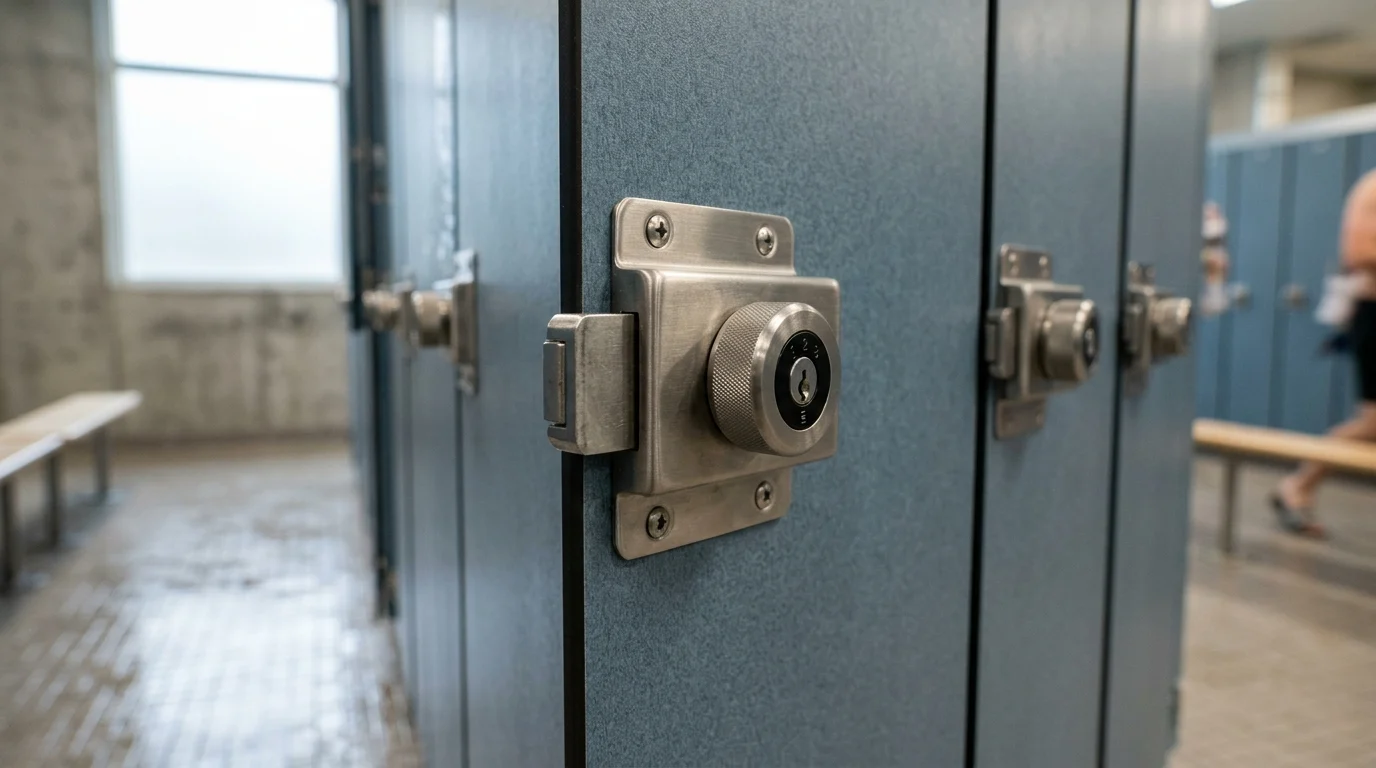
Pool locker rooms expose hardware to a harsh mix of moisture, chloramines, temperature swings, and frequent cleaning, making ordinary metal components fail far sooner than expected. This article explains which hardware categories are most vulnerable, why common finishes and alloys break down in aquatic environments, and what rust-proof materials and construction details can realistically deliver 10 or more years of service. You will also see how smarter specification choices reduce maintenance calls, safety risks, and replacement costs, setting up a practical look at the hardware options that hold up best in commercial swimming pool facilities.
Why Rust-Proof Locker Room Hardware Matters
Commercial swimming pool locker rooms represent one of the most hostile interior environments for architectural hardware. Facility managers and specifiers must account for constant moisture, fluctuating ambient temperatures, and aggressive chemical off-gassing. Selecting hardware that can withstand these conditions for a decade or more is not merely an aesthetic preference but a fundamental requirement for facility safety, operational continuity, and budget management. The financial implications of ignoring these environmental stressors are substantial, as premature hardware degradation directly impacts the bottom line through escalated maintenance overhead.
Corrosion risks in pool environments
The atmospheric chemistry of an indoor aquatic facility aggressively accelerates metal degradation. When chlorine reacts with organic matter, it produces chloramines, which off-gas and settle on locker room surfaces. Combined with ambient relative humidity levels that routinely fluctuate between 60% and 80%, this creates a highly conductive electrolyte film on hardware. In these conditions, airborne chloride concentrations frequently exceed 0.5 mg/m³, initiating rapid pitting corrosion and stress corrosion cracking (SCC) in standard ferrous metals and inferior alloys. This microscopic deterioration often remains invisible to the naked eye until structural integrity is critically compromised, highlighting the necessity of proactive material selection.
High-priority hardware categories
Certain locker room components are disproportionately vulnerable to structural failure and require rigorous specification. Locker hinges, latching mechanisms, bench brackets, and shower partition fasteners bear the brunt of both environmental exposure and heavy kinetic use. Standard zinc-plated or lower-grade stainless hinges often experience catastrophic failure within 12 to 18 months in these environments. When hinges warp or latches seize due to rust, it compromises patron security and forces maintenance teams into a continuous, costly cycle of component replacement. Furthermore, rusted lockers and broken shower partitions present severe liability risks, including potential lacerations to patrons and subsequent exposure to tetanus or other pathogens.
Best Rust-Proof Hardware Materials
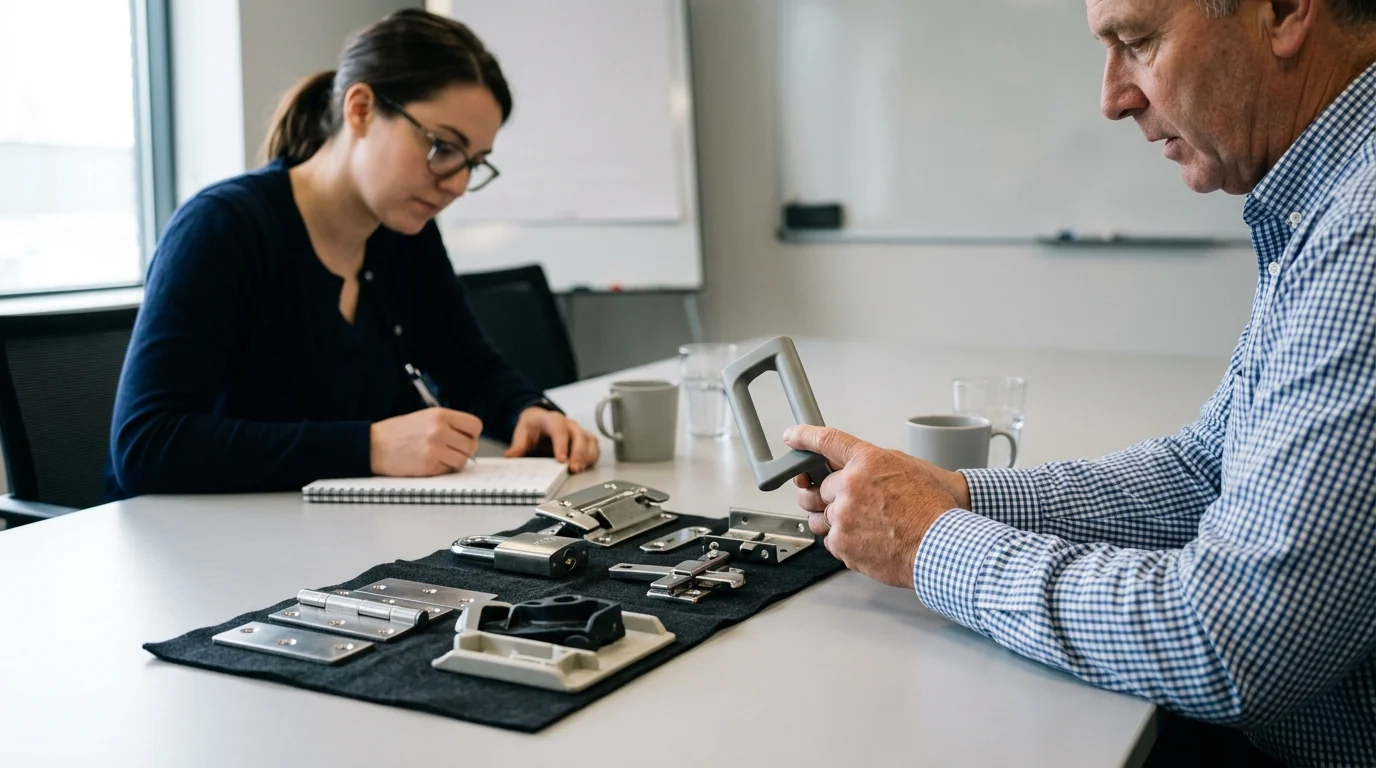
Achieving a 10-year lifespan in a chlorinated environment dictates a strict departure from standard commercial hardware materials. Specifiers must evaluate substrates not only for their baseline tensile strength but also for their specific chemical resistance profile. The market primarily relies on advanced stainless steel alloys and engineered polymers to meet these rigorous longevity demands. Architects and facility engineers must scrutinize the micro-structural properties of these materials to ensure they align with the specific ventilation and humidity control capabilities of the building.
Material options for wet, chlorinated spaces
Type 304 stainless steel is ubiquitous in standard commercial construction but routinely fails in aquatic environments due to chloride-induced pitting. Instead, Type 316 stainless steel is the mandatory baseline for metal hardware in pool locker rooms. Type 316 contains 2% to 3% molybdenum, an alloying element that drastically improves resistance to localized chloride attack. However, even 316 stainless requires proper surface treatments, such as electropolishing or chemical passivation, to maximize its corrosion-resistant oxide layer. Alternatively, High-Density Polyethylene (HDPE) and solid phenolic resins offer completely rust-proof solutions for handles, hinges, and structural brackets, eliminating oxidation risks entirely. For specialized applications like electronic RFID locker locks, internal printed circuit boards must be conformal coated, and battery compartments must utilize dual O-ring seals to prevent moisture ingress that causes internal galvanic corrosion.
Key comparison criteria
When evaluating materials for locker room hardware, specifiers must balance initial capital expenditure against lifecycle longevity and maintenance requirements. Facility operators must also consider the aesthetic degradation associated with lesser materials. Rust bleeding onto adjacent surfaces like tile or composite panels creates permanent staining, which requires aggressive, labor-intensive acid washing to remediate. The following table illustrates the comparative metrics of common locker room hardware materials utilized in aquatic environments.
| Material Grade | Relative Cost Multiplier | Expected Lifespan | Chloride Resistance Rating |
|---|---|---|---|
| Type 304 Stainless Steel | 1.0x (Baseline) | 2-4 Years | Low (Prone to pitting) |
| Type 316 Stainless Steel | 1.4x – 1.6x | 10+ Years | High |
| Heavy-Duty HDPE | 1.2x | 15+ Years | Excellent (Inert) |
| Solid Phenolic | 1.8x | 20+ Years | Excellent (Inert) |
While solid phenolic and Type 316 stainless steel represent a higher initial investment, their extended operational lifespans absorb the upfront premium by eliminating cyclical replacement labor.
How to Specify and Select Hardware
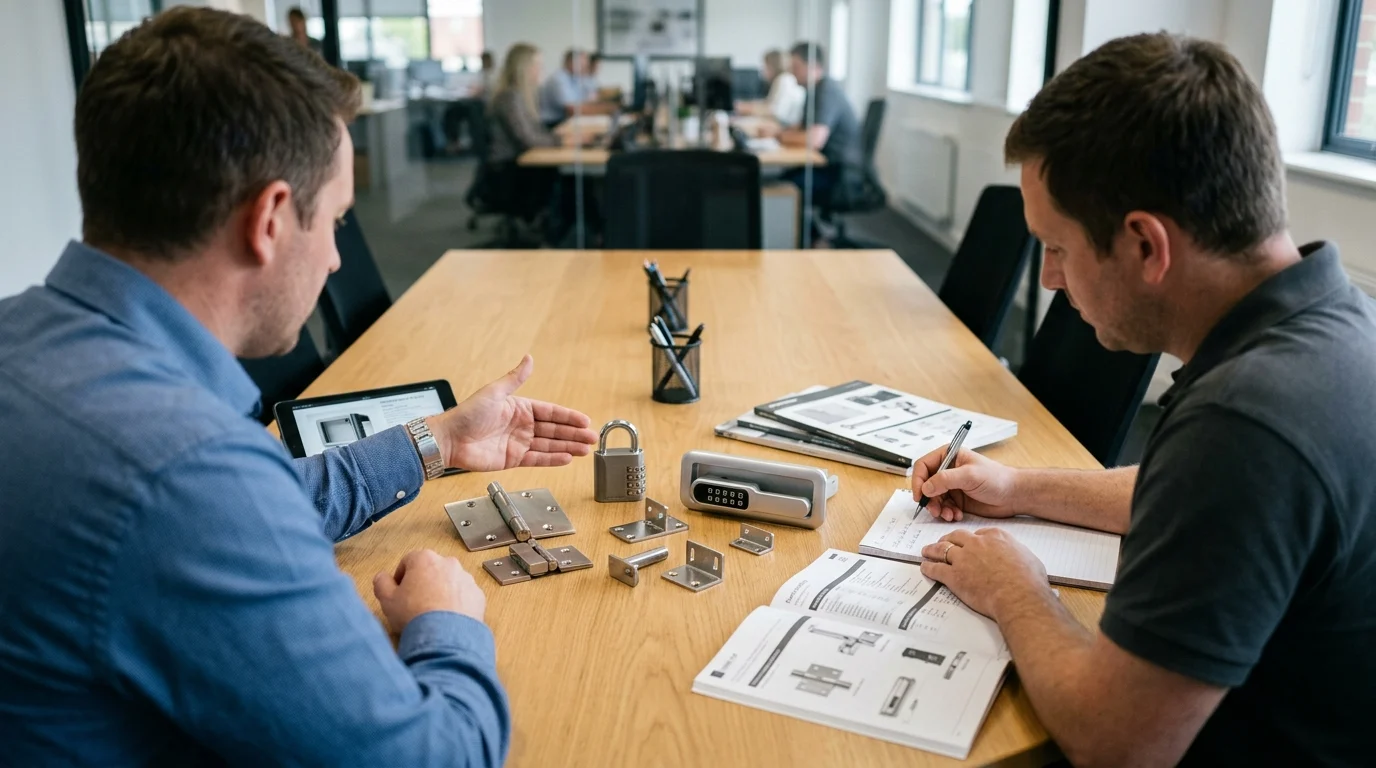
Procuring hardware capable of enduring a decade in an aquatic facility requires precise documentation and strategic vendor alignment. Vague specifications frequently lead to value engineering, where contractors substitute marine-grade components with visually identical, yet chemically inferior, alternatives. Securing the correct hardware demands rigorous specification language and a thorough understanding of procurement logistics. A well-crafted specification acts as a legal firewall, ensuring that the facility receives the exact corrosion-resistant technology required to fulfill its operational mandate.
Specification and sourcing steps
The specification process must explicitly prohibit generic material callouts. Procurement documents should mandate exact metallurgical standards, such as ASTM A240 for stainless steel, and require vendors to submit passivation certificates prior to installation. Furthermore, dimensional specifications are critical; structural hardware like locker hinges should specify a minimum thickness of 14-gauge (0.0747 inches) to prevent mechanical deformation under high-traffic loads. When sourcing these specialized components, facility managers must account for extended lead times, as custom marine-grade hardware runs often require 6 to 8 weeks for fabrication and delivery. Minimum Order Quantities (MOQs) also play a vital role in sourcing. Manufacturers of specialized phenolic or 316 stainless components may require MOQs of 500 to 1,000 units, necessitating bulk purchasing strategies for large-scale aquatic centers or franchise operations.
Decision criteria for long-term performance
Long-term performance hinges on evaluating the total cost of ownership (TCO) and regulatory compliance. Facility managers must weigh the upfront costs of premium materials against the long-term savings achieved through reduced maintenance, fewer replacements, and minimized liability risks. By prioritizing durability and chemical resistance, aquatic centers can ensure their locker room hardware remains safe, functional, and aesthetically pleasing for a decade or more.
Key Takeaways
- The most important conclusions and rationale for Commercial Swimming Pool Locker Room Hardware: Rust-Proof Solutions That Last 10+ Years
- Specs, compliance, and risk checks worth validating before you commit
- Practical next steps and caveats readers can apply immediately
Frequently Asked Questions
Why does standard 304 stainless rust so quickly in pool locker rooms?
Chloramines and high humidity accelerate pitting on 304. For 10+ years, specify 316 stainless with passivation or electropolishing instead.
Which hardware parts should be upgraded first in a commercial pool locker room?
Prioritize hinges, latches, bench brackets, and shower partition fasteners. These see the most moisture, chemical exposure, and daily wear.
Is HDPE or solid phenolic better than stainless for wet areas?
For fully rust-proof performance, yes. HDPE and solid phenolic resist chlorides completely and often outlast metal in splash-prone zones.
What should buyers ask a hardware supplier before ordering pool locker room parts?
Ask for material grade, surface treatment, expected chloride resistance, and test data. If sourcing from a manufacturer like HZ Die Casting, request alloy and finishing details in writing.
How can facility managers extend hardware life beyond 10 years?
Use 316-grade parts, improve ventilation, rinse residue regularly, and replace damaged coatings early. Avoid mixing dissimilar metals that can trigger galvanic corrosion.