
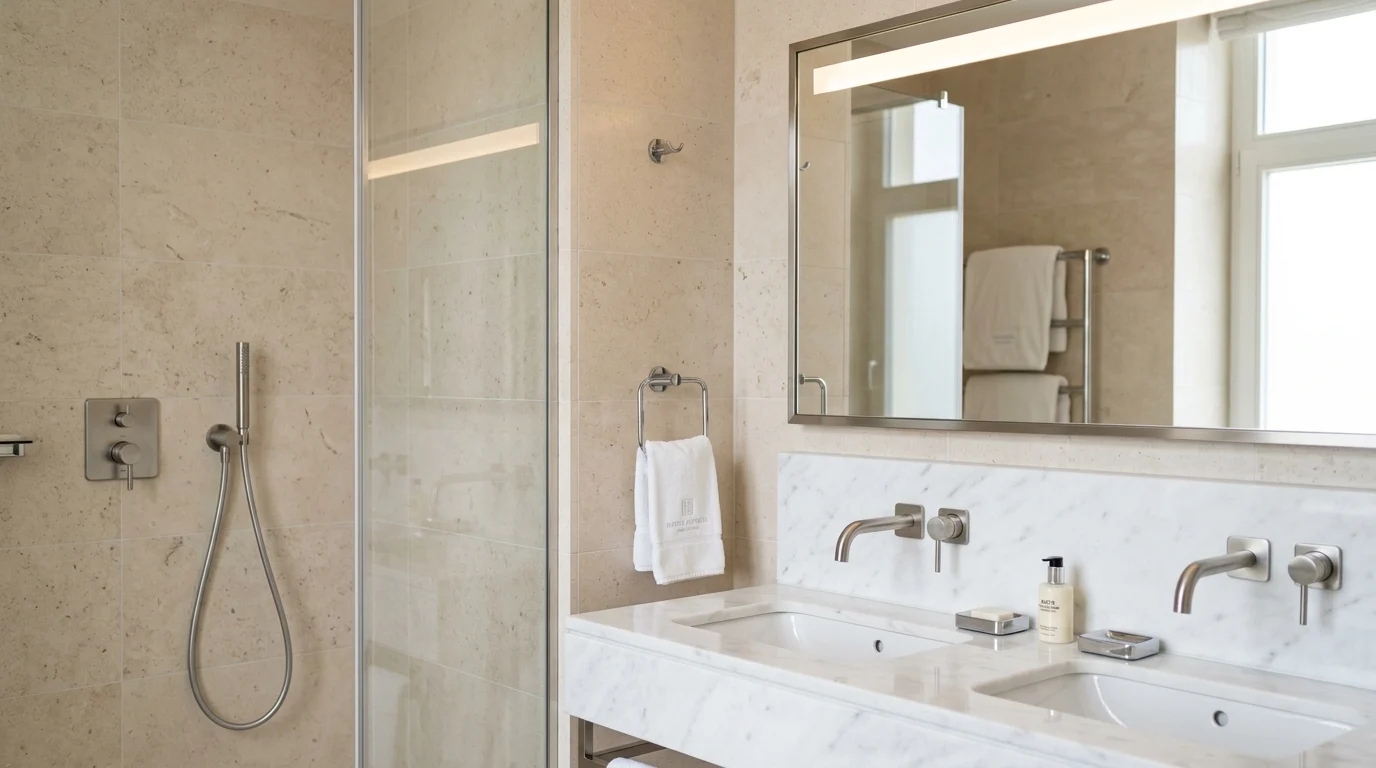
In Europe’s five-star hotel market, bathroom hardware is specified less as décor and more as critical infrastructure. Brand standards focus on how fittings perform under thousands of annual use cycles, aggressive cleaning routines, hard-water exposure, and the retrofit constraints common in historic properties. This article explains what major luxury operators actually look for, from concealed-body materials such as DZR brass to finish technologies like PVD, and why these requirements affect maintenance risk, guest perception, and lifecycle cost. It also provides a practical framework for understanding which technical details matter most when evaluating products for premium hospitality projects.
Why European Five-Star Hotel Bathroom Hardware Standards Matter
In the European luxury hospitality sector, bathroom hardware transcends mere interior design to function as a critical operational asset. Five-star brands enforce stringent hardware standards to mitigate the severe liabilities associated with water damage, high usage volumes, and aggressive housekeeping protocols.
A standard luxury hotel bathroom experiences approximately 3,000 to 4,000 usage cycles annually, demanding robust engineering that far exceeds residential specifications. Furthermore, many premium European properties are situated in historic buildings where retrofitting plumbing is exceptionally difficult, making the initial specification of highly durable hardware a matter of long-term asset protection and insurance compliance.
How luxury hotel brands define bathroom hardware performance
Luxury hotel brands evaluate bathroom hardware performance through the dual lenses of mechanical endurance and finish longevity. High-end operators mandate the use of dezincification-resistant (DZR) brass for all concealed components to prevent structural degradation, particularly in the hard water regions prevalent across Central and Southern Europe.
For exposed surfaces, standard electroplating is increasingly being replaced by physical vapor deposition (PVD). PVD finishes are specified to withstand a minimum of 200 hours in neutral salt spray testing in accordance with the EN 248 standard, ensuring formidable resistance against the abrasive chemical agents utilized in daily commercial cleaning regimens. Internally, operators require rigorous mechanical testing. Ceramic disc cartridges within basin mixers must be certified to endure a minimum of 500,000 actuation cycles without failure, leakage, or significant degradation in handle torque. Additionally, compliance with EN 817 for mechanical mixing valves is a non-negotiable baseline for any brand-approved supplier.
Which scope and definitions should be clarified early
Project stakeholders must establish precise definitions regarding the hardware scope during the schematic design phase to prevent costly downstream variations. This scope encompasses exposed fixtures, concealed thermostatic valves, and critical accessibility hardware. Early clarification of hydraulic parameters is paramount; luxury rain showers typically require a minimum dynamic operating pressure of 3.0 bar to deliver the expected tactile experience, while multi-outlet shower systems may require dedicated high-flow 22mm supply lines.
Simultaneously, accessibility compliance must be defined early. European standards, such as Document M in the United Kingdom or DIN 18040 in Germany, dictate specific dimensions for grab bars—typically mandating a diameter of 32mm to 35mm—and require strict visual contrast ratios against wall tiles. Ambiguity in these definitions often leads to costly retrofits, especially if concealed valve bodies are installed before the final trim kits and accessibility layouts are fully approved by the brand’s technical services team.
What European Five-Star Hotel Brands Require

European five-star operators dictate hardware procurement through comprehensive brand standard manuals that intertwine aesthetic vision with rigorous statutory compliance. Navigating these requirements demands a thorough understanding of regional material certifications, acoustic performance mandates, and advanced water conservation metrics.
The tension between emerging design trends and the harsh reality of commercial maintenance requires suppliers to deliver solutions that are both visually striking and industrially resilient.
Which technical, aesthetic, and compliance criteria matter
Technical compliance in Europe is heavily fragmented by national regulations, making pan-European procurement highly complex. Brands require strict adherence to certifications such as WRAS in the UK, DVGW in Germany, and NF in France. A critical safety metric across all European five-star standards is anti-scald protection; thermostatic mixing valves must feature a thermal override that shuts off water flow within 1.5 seconds if the cold water supply fails.
Acoustically, luxury standards demand Class 1 performance, restricting water flow noise to under 20 decibels (dB) at a dynamic pressure of 3 bar, ensuring that plumbing acoustics do not disturb adjacent guestrooms. Furthermore, the industry is rapidly adapting to stringent material safety standards, with brand manuals now enforcing the 4MS Common Composition List, which mandates that the lead content in drinking water contact materials must remain below 0.1%. Aesthetically, brands require exact color matching across disparate materials, mandating that the brushed brass of a shower hinge perfectly aligns with the basin mixer.
How lifecycle cost, maintenance, and water efficiency are evaluated
Operators evaluate hardware through a total cost of ownership (TCO) model rather than initial capital expenditure. Replacing a failed concealed valve can cost up to ten times the unit’s purchase price due to the necessary demolition and replacement of luxury stonework. Consequently, commercial warranties of 10 to 15 years are baseline expectations. Finish selection plays a massive role in lifecycle costs.
| Finish Technology | Est. Lifespan in Hospitality | Cost Multiplier | Maintenance Requirement |
|---|---|---|---|
| Standard Chrome | 5-7 Years | 1.0x | High (Shows water spots) |
| Powder Coating | 3-5 Years | 1.2x | Medium (Prone to chipping) |
| PVD (Physical Vapor Deposition) | 10-15+ Years | 1.8x – 2.5x | Low (Highly scratch resistant) |
Water efficiency is another critical evaluation vector. To achieve high-tier BREEAM or LEED certifications, brands mandate pressure-compensating flow restrictors. Basin mixers are typically capped at 5.0 liters per minute (L/min), while showerheads are restricted to 9.0 L/min. Suppliers must demonstrate that their aerators can maintain a voluminous, aerated water feel despite these stringent flow limitations, ensuring the sustainability targets do not compromise the guest’s perception of luxury.
How Owners, Operators, and Suppliers Should Decide

Balancing stringent European brand standards with project budgets and construction schedules requires a highly analytical procurement strategy. Owners, operators, and suppliers must collaborate closely to navigate supply chain complexities, mitigate compliance risks, and execute value engineering without compromising the guest experience.
The tripartite relationship between the investor funding the project, the brand operator enforcing the standards, and the MEP contractor executing the installation is the crucible where final hardware decisions are forged.
What sourcing, qualification, testing, and logistics steps reduce risk
Risk reduction begins with comprehensive supplier qualification, including rigorous factory audits for ISO 9001 (Quality Management) and ISO 14001 (Environmental Management) certifications. Before mass production is authorized, operators mandate physical mock-up room installations to test ergonomics, water pressure dynamics, and the interaction of hardware finishes with architectural lighting.
Logistics planning is
Key Takeaways
- The most important conclusions and rationale for European Five-Star Hotel Bathroom Hardware Standards: What Brands Actually Require
- Specs, compliance, and risk checks worth validating before you commit
- Practical next steps and caveats readers can apply immediately
Frequently Asked Questions
What core standards do European five-star hotels expect for bathroom hardware?
Most brands expect EN 817 compliance, DZR brass for concealed parts, and PVD finishes that meet EN 248 salt-spray requirements for durability.
Why do luxury hotels specify DZR brass and PVD finishes?
DZR brass resists corrosion in hard-water regions, while PVD helps exposed surfaces withstand harsh daily cleaning and maintain a premium appearance longer.
What performance level is typically required for hotel mixer cartridges?
Ceramic disc cartridges are commonly required to pass at least 500,000 actuation cycles without leakage, failure, or major torque change.
Which certifications may be needed for different European hotel projects?
Requirements vary by country, but UK projects may need WRAS, Germany DVGW, and France NF, alongside brand-specific approval documents.
How can hzdiecasting.com support five-star hotel bathroom hardware projects?
By supplying precision die-cast components with consistent finish matching, durable base materials, and production aligned to hotel durability and compliance targets.