
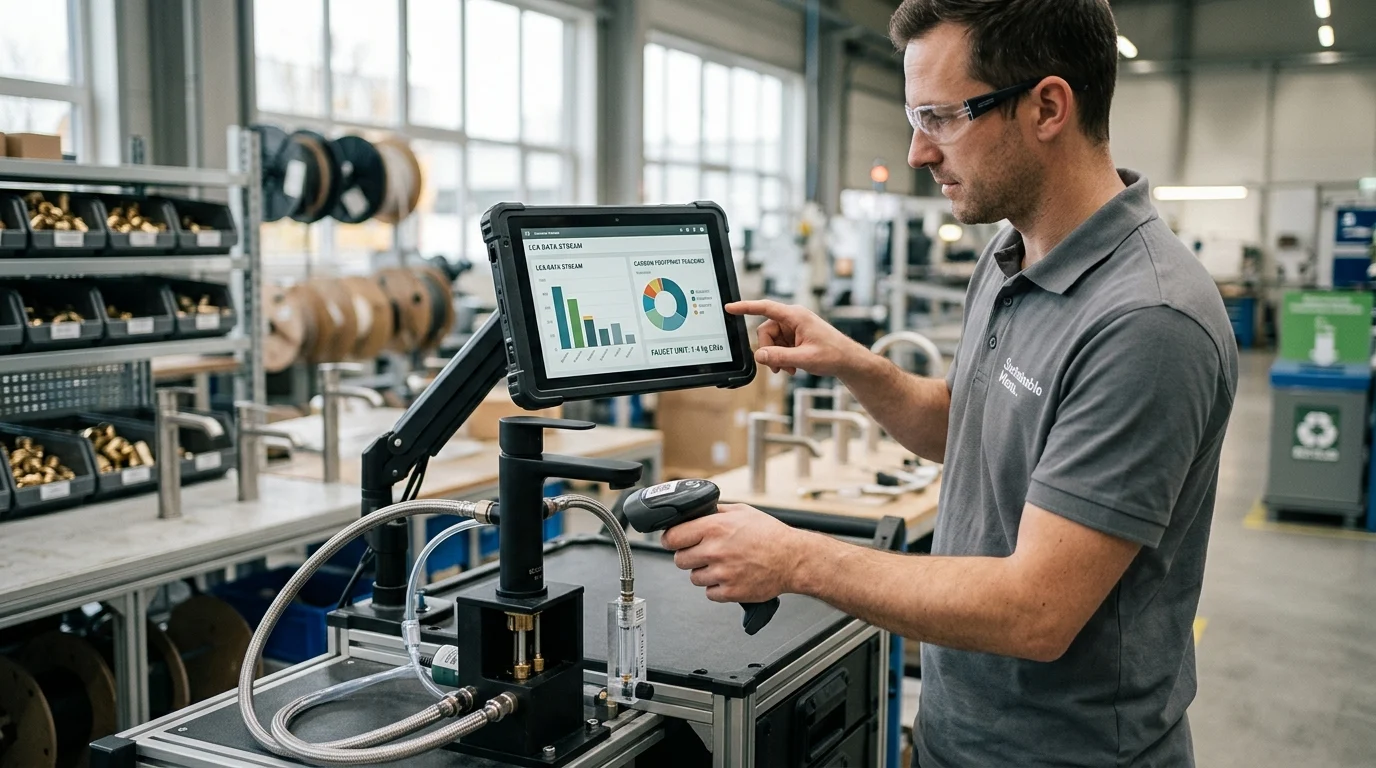
Bathroom hardware manufacturers are under growing pressure to prove that sustainability claims hold up across the full product life cycle. This topic explains how life cycle assessment and carbon footprint tracking are used to measure impacts from material sourcing and production through use and disposal, while also improving compliance, cost control, and product transparency. It also clarifies why choices such as system boundaries, functional units, and data quality can significantly change reported results. By the end, readers will understand the methods, technology, and business drivers shaping more accountable manufacturing decisions.
Why Sustainable Manufacturing Matters for Bathroom Hardware Life Cycle: A
The integration of life cycle assessment (LCA) methodologies into bathroom hardware manufacturing has transitioned from a voluntary sustainability initiative to a core strategic imperative. As global regulatory frameworks tighten and supply chain transparency becomes non-negotiable, manufacturers must quantify the environmental impact of their fixtures, from raw material extraction to end-of-life disposal.
How do bathroom hardware LCA boundaries, functional units, and scope affect results?
Defining strict LCA boundaries and functional units is critical for accurate environmental modeling. A cradle-to-gate assessment measures impacts from resource extraction up to the factory exit, whereas a cradle-to-grave approach encompasses consumer use and disposal. For bathroom hardware, the functional unit is typically defined as a specific fixture operating over a standard lifespan, such as a faucet delivering 1.5 gallons per minute (GPM) over a 10-year period. Altering these system boundaries can shift reported global warming potential (GWP) by 25% to 40%, underscoring the necessity for strict alignment with ISO 14040 and 14044 standards to prevent greenwashing and ensure comparability across product lines.
Which cost, compliance, and brand-risk pressures are pushing manufacturers to act?
Regulatory compliance and financial risk mitigation are primary catalysts driving LCA adoption. Mechanisms like the European Union’s Carbon Border Adjustment Mechanism (CBAM) directly penalize high-emission imports, effectively levying tariffs that currently fluctuate between €60 and €90 per metric ton of CO2 equivalent (CO2e). Manufacturers failing to provide verified carbon footprint data risk exclusion from lucrative markets and major commercial developments. Furthermore, institutional buyers and developers pursuing LEED or BREEAM certifications increasingly mandate Environmental Product Declarations (EPDs), creating immense brand risk for hardware suppliers unable to substantiate their sustainability claims with rigorous LCA data.
How Should Bathroom Hardware Life Cycle Assessment (LCA) Be Structured
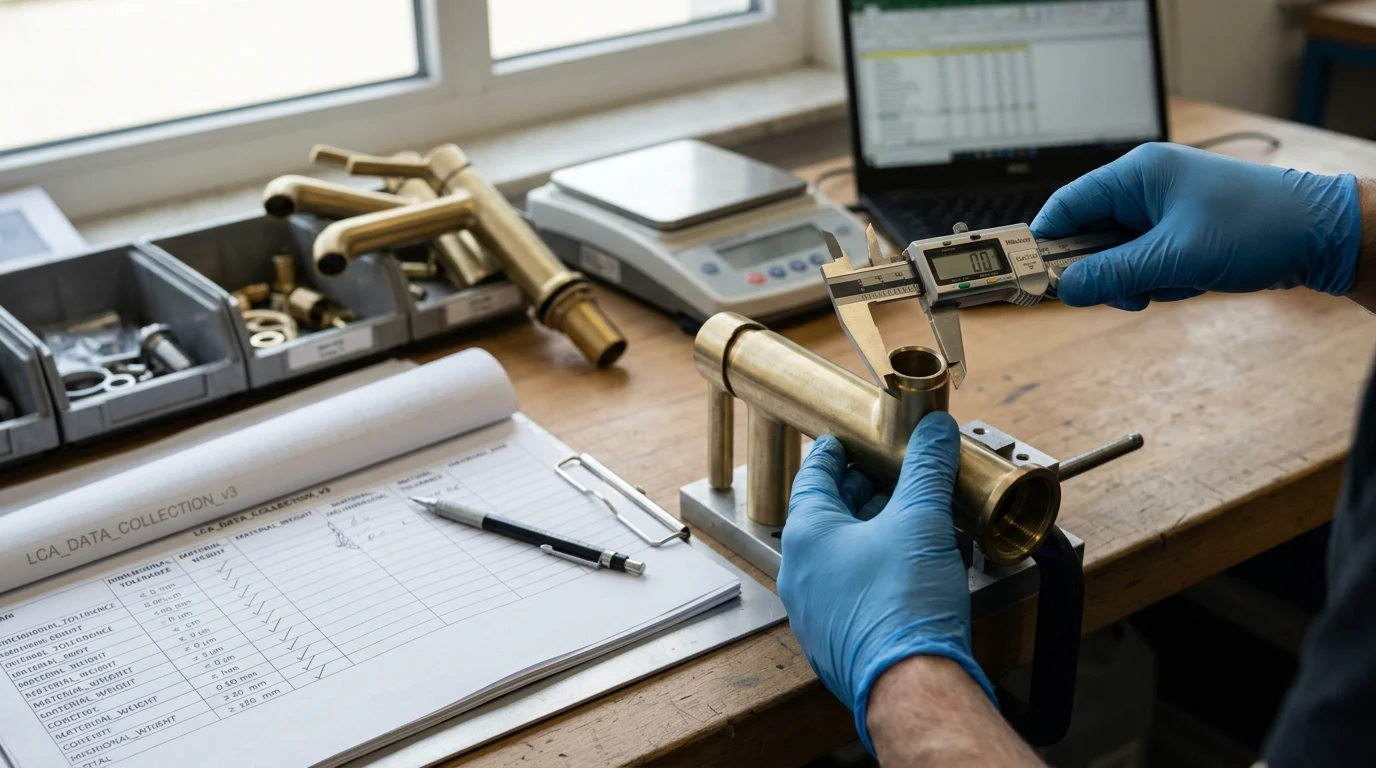
Structuring a reliable LCA for bathroom hardware requires granular data collection across highly specific metallurgical and chemical processes. The framework must capture the intense energy requirements of casting, machining, and surface finishing while accounting for the recyclability of the base metals.
Which data inputs, process stages, and comparison points belong in a reliable LCA?
A robust LCA framework isolates primary data across distinct manufacturing stages: raw material acquisition, primary processing (such as forging or die-casting), secondary machining, surface treatment, and outbound logistics. Surface finishing is particularly critical; traditional hexavalent chromium electroplating can account for up to 45% of a fixture’s total manufacturing energy consumption and introduces significant ecotoxicity variables. Accurate assessments must substitute generic industry averages with primary facility data, tracking kilowatt-hours per unit processed, water usage in liters per batch, and specific chemical effluent concentrations, thereby establishing precise baselines for continuous improvement.
How do stainless steel, brass, zinc alloy, aluminum, and
plastic compare in LCA?
Material selection dictates the fundamental carbon baseline of any bathroom fixture. The comparative environmental profiles of common alloys reveal stark contrasts in embodied carbon and end-of-life recovery potential.
| Material | Average Embodied Carbon (kg CO₂e/kg) | Typical Recycled Content (%) | End-of-Life Recyclability |
|---|---|---|---|
| Stainless Steel (304/316) | 4.5 – 5.5 | 60% – 85% | High |
| Brass (Standard CuZn39Pb3) | 3.0 – 4.5 | 50% – 100% | High |
| Zinc Alloy (Zamak) | 2.5 – 3.5 | 10% – 30% | Moderate |
| Virgin Aluminum | 11.0 – 16.0 | < 10% | High |
| ABS Plastic | 3.0 – 4.0 | < 5% | Low |
While virgin aluminum presents the highest initial GWP, utilizing 100% recycled aluminum reduces its footprint by up to 95%. Stainless steel offers exceptional durability and avoids intensive plating processes, whereas brass benefits from highly established closed-loop recycling infrastructure. LCA models must weigh these embodied carbon metrics against the expected functional lifespan of the hardware to determine true sustainability.
What Carbon Footprint Tracking Technology? Best Supports Sustainable Manu
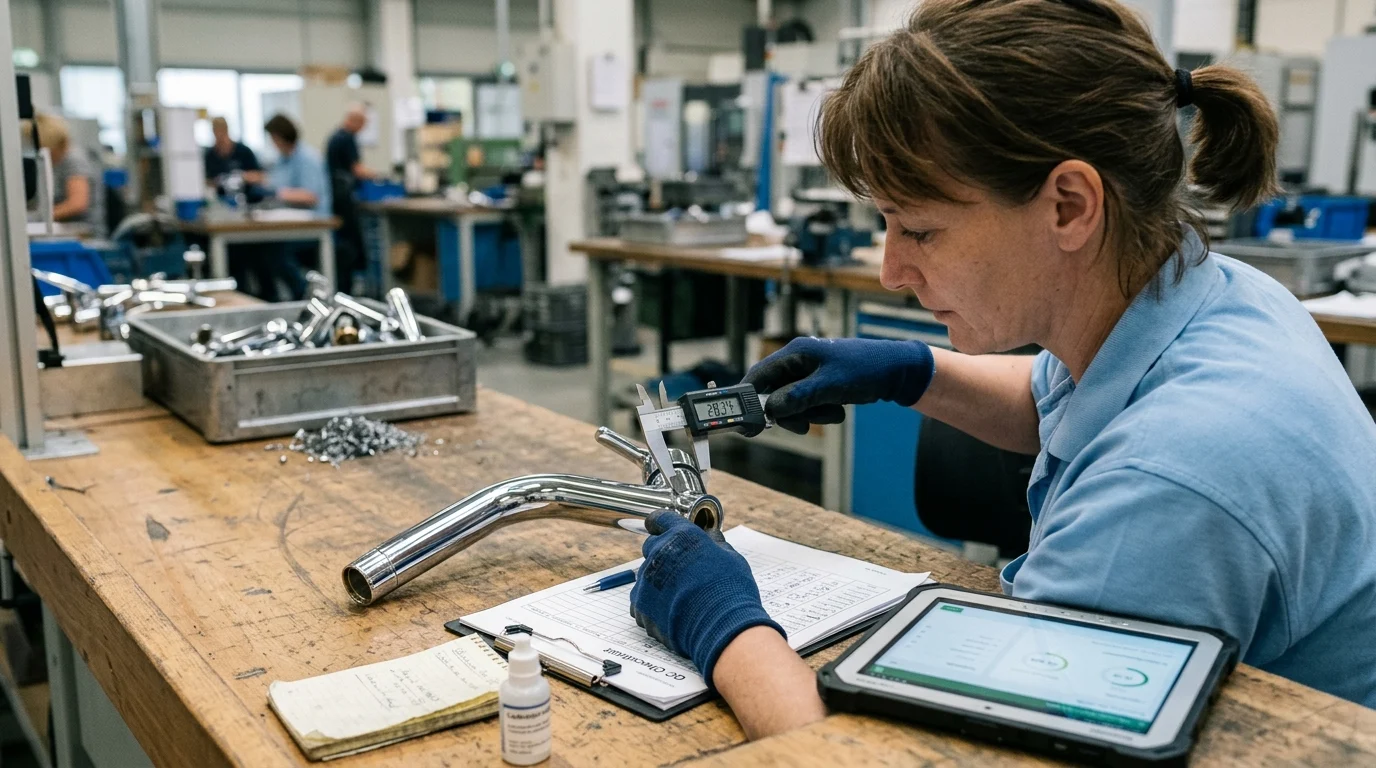
Transitioning from static, annualized LCA reports to continuous, dynamic carbon accounting requires sophisticated tracking technology. Modern manufacturing environments utilize specialized software ecosystems to monitor emissions in real-time, bridging the gap between factory floor operations and corporate sustainability reporting.
Which digital tools, from ERP-linked dashboards to supplier tracking, work best?
The most effective digital tools integrate directly with enterprise resource planning (ERP) systems and manufacturing execution systems (MES). Carbon accounting platforms utilize APIs to ingest real-time utility data, material bills (BOMs), and logistics routing. IoT sensors deployed on casting furnaces and CNC machinery can stream energy consumption data with sub-second latency, reducing the data lag from months to under 24 hours. Additionally, specialized supplier tracking portals allow Tier 1 and Tier 2 vendors to input their scope 3 emissions directly into the manufacturer’s database, ensuring that upstream impacts from raw ingot processing or third-party logistics are captured accurately.
How should manufacturers evaluate automation, auditability, integration, and reporting?
When evaluating carbon footprint tracking technologies, manufacturers must prioritize automation, auditability, and seamless integration. Automated data capture minimizes human error and administrative overhead, which is critical given that Scope 3 emissions often constitute 70% to 85% of a hardware manufacturer’s total carbon footprint. Systems must offer high auditability, providing immutable data logs that satisfy third-party EPD verifiers and regulatory auditors. Finally, robust reporting capabilities are essential; the software should automatically generate compliant disclosures aligned with the Greenhouse Gas (GHG) Protocol and automatically update LCA models when manufacturing parameters, such as a shift to a 50% renewable energy grid mix, are implemented.
Key Takeaways
- The most important conclusions and rationale for Sustainable Manufacturing: Bathroom Hardware Life Cycle Assessment (LCA) and Carbon Footprint Tracking Technology
- Specs, compliance, and risk checks worth validating before you commit
- Practical next steps and caveats readers can apply immediately
Frequently Asked Questions
What is the main goal of an LCA for bathroom hardware?
To measure environmental impact from raw materials to end-of-life, so manufacturers can identify hotspots and cut carbon, energy, and waste.
Should bathroom hardware LCA be cradle-to-gate or cradle-to-grave?
Use cradle-to-gate for factory impacts only and cradle-to-grave when you also need use-phase and disposal data. Choose based on your reporting goal.
Which material usually has the best LCA performance?
It depends on recyclability and lifespan, but brass and stainless steel often perform well because they are durable and highly recyclable.
Why is surface finishing important in bathroom hardware carbon tracking?
Finishing can be a major energy hotspot, especially plating. Tracking kWh, chemicals, and water use helps reduce emissions and ecotoxicity.
How can manufacturers track carbon emissions more accurately?
Link ERP data with carbon software to monitor material use, machine energy, logistics, and supplier inputs in real time instead of relying on annual averages.