
Introduction
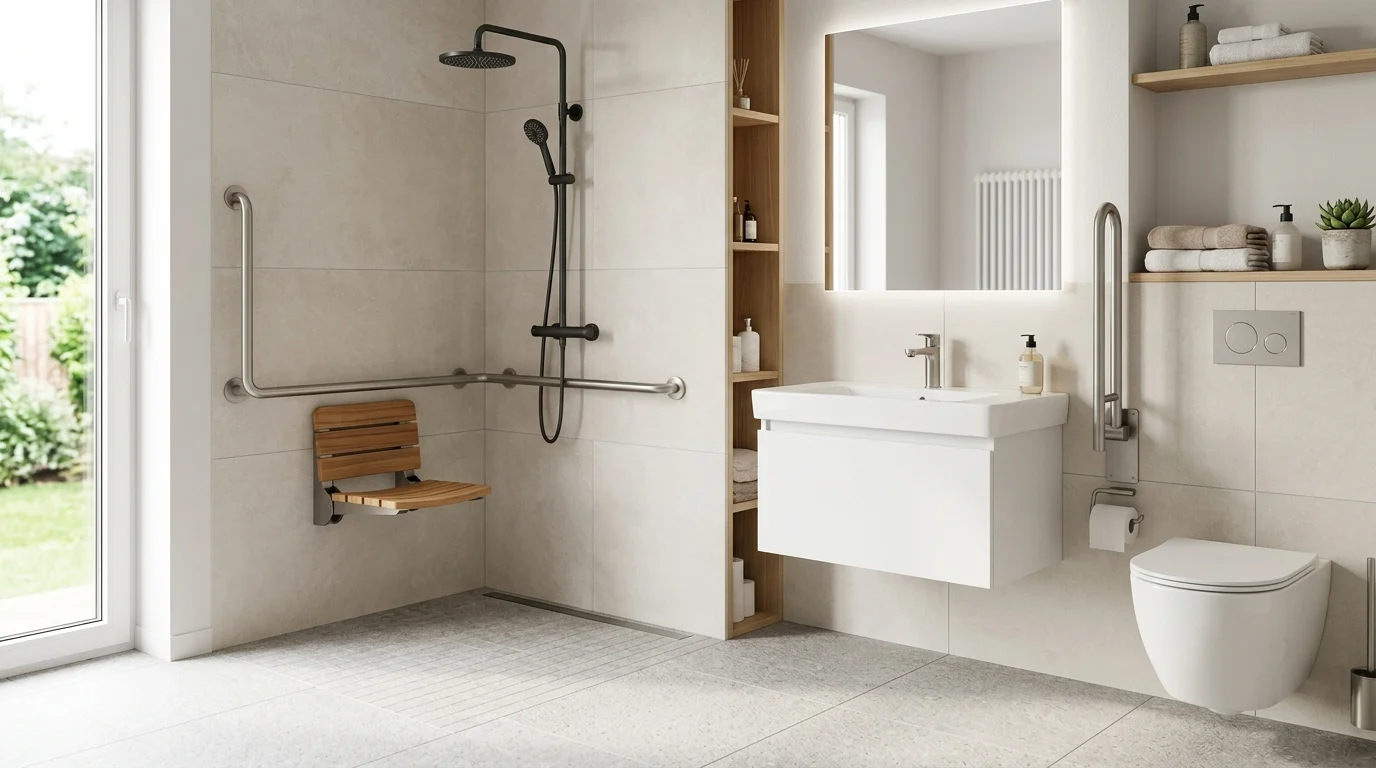
Universal design bathrooms are moving beyond purely functional accessibility toward spaces that feel intentional, refined, and safe for every user. As aging populations grow and inclusive housing becomes a higher priority, architects and homeowners are rethinking how layout, drainage, flooring, and fixtures can support mobility without sacrificing visual quality. The most effective solutions now hide protection inside elegant details, from barrier-free showers to seamless waterproof finishes. This article examines how current design and engineering practices are reshaping accessible bathrooms and what it takes to balance everyday safety with a more sophisticated, future-ready aesthetic.
The Future of Universal Design Bathrooms
Universal design in bathroom architecture has transcended its origins as a regulatory afterthought. Historically characterized by clinical aesthetics, modern accessible washrooms now prioritize an integrated approach where safety mechanisms are indistinguishable from high-end architectural features. This paradigm shift demands rigorous engineering, ensuring that spatial configurations accommodate all mobility levels without compromising visual elegance.
How Design Principles Are Shifting Beyond Basic Accessibility
The fundamental philosophy of universal bathroom design is shifting from reactive retrofitting to proactive spatial planning. Architects are abandoning the traditional curved shower in favor of zero-threshold wet rooms, eliminating physical barriers for wheelchair users. This requires meticulous subfloor engineering. Constructing a curbless enclosure necessitates a precise 1/4-inch per foot slope toward a linear drain to guarantee rapid water evacuation without impeding wheeled maneuverability. By depressing the floor joists by at least 2 inches during the initial framing phase rather than relying on superficial ramps, engineers eliminate tripping hazards entirely. Modern waterproofing protocols utilize advanced membranes that extend continuously from the shower pan across the entire bathroom floor, creating a cohesive, watertight envelope that supports seamless visual continuity.
How Aesthetics and Safety Are Being Balanced
Achieving aesthetic harmony alongside rigorous safety requirements relies heavily on dual-purpose fixtures and advanced material finishes. Manufacturers are now engineering structural handholds that masquerade as minimalist towel bars or integrated shower shelving units. To comply with commercial safety mandates, these disguised grab bars must be anchored to withstand a minimum shear force of 250 pounds, with high-traffic environments often specifying load capacities up to 500 pounds. Furthermore, designers are leveraging Light Reflectance Value (LRV) differentials to aid visually impaired users. By ensuring a minimum 30% LRV contrast between sanitary fixtures and surrounding wall surfaces, functional elements become easily identifiable. This scientific approach to color contrast allows for sophisticated, matte-finished palettes that evoke luxury hospitality rather than clinical facilities.
Standards, Compliance, and Materials
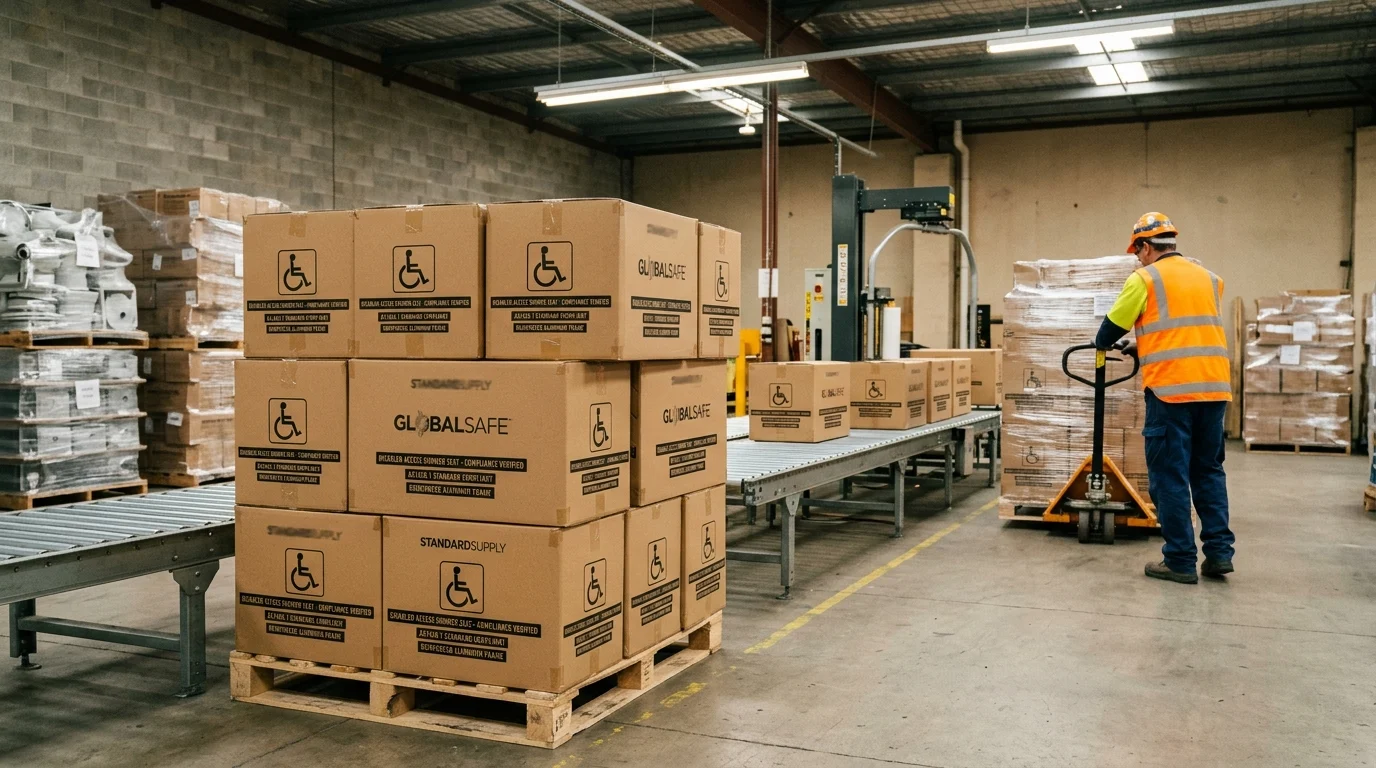
Ensuring long-term durability and safety in universal bathrooms requires strict adherence to evolving material standards and building codes. The intersection of material science and regulatory compliance forms the backbone of any successful inclusive design, dictating everything from surface friction coefficients to precise dimensional clearances.
Which performance metrics matter most?
Slip resistance remains the most critical performance metric in wet-zone engineering. The industry standard metric, the Dynamic Coefficient of Friction (DCOF), quantifies a surface’s traction under wet conditions. While the ANSI A137.1 standard mandates a minimum DCOF of 0.42 for level interior spaces walked upon when wet, universal design frameworks for high-risk environments frequently specify flooring materials exceeding a 0.50 DCOF threshold. Achieving this higher friction rating without creating highly porous surfaces that harbor bacteria requires advanced glaze technologies and micro-textured finishes.
| Flooring Material | Average Wet DCOF | Maintenance Profile | Ideal Universal Application |
|---|---|---|---|
| Matte Porcelain Mosaic | 0.55 – 0.65 | Low (Standard non-abrasive cleaners) | Zero-threshold shower pans |
| Honed Natural Stone | 0.45 – 0.50 | High (Requires periodic penetrating sealers) | Dry-zone maneuvering areas |
| Textured Luxury Vinyl | 0.42 – 0.48 | Low (Avoid harsh chemical solvents) | Assisted living private suites |
| Polished Ceramic | 0.20 – 0.30 | Low | NOT RECOMMENDED for bathroom floors |
Which Codes and Certifications Shape the Design
Design parameters are strictly governed by a matrix of international codes, most notably the Americans with Disabilities Act (ADA) guidelines and ISO 21542 standards for building accessibility. These frameworks dictate non-negotiable spatial metrics for commercial and multi-family residential projects. For instance, a compliant bathroom must provide a 60-inch minimum diameter turning space for wheelchair maneuverability, alongside a 30-by-48-inch clear floor space positioned at every fixture. Beyond basic dimensional compliance, progressive building certifications like the WELL Building Standard are heavily influencing material choices. These certifications restrict volatile organic compounds (VOCs) in adhesives and prioritize antimicrobial glazes on ceramic surfaces. By adhering to these multifaceted codes, architectural teams ensure the environment is both physically accessible for diverse mobility needs and biologically safe for immunocompromised users.
Procurement, Installation, and Lifecycle Planning

The successful execution of a universal bathroom design hinges on meticulous procurement strategies and cross-disciplinary coordination during the construction phase. Because inclusive design relies heavily on structural integration rather than surface-level additions, lifecycle planning must begin long before the first materials arrive on site.
How Teams Can Coordinate Design and Construction
Seamless execution requires rigorous coordination between architectural designers, structural engineers, and plumbing contractors. A primary failure point in universal bathroom construction is the omission of continuous structural blocking behind the drywall. Installing 2×8 or 2×10 solid wood blocking between wall studs at a continuous height of 33 to 36 inches above the finished floor during the rough-framing phase is a critical industry best practice. This proactive coordination allows for the installation or relocation of weight-bearing fixtures, such as fold-down shower seats or supplementary grab bars, at any point in the building’s lifecycle. Implementing this blocking during initial construction costs significantly less and reduces future retrofit structural modification expenses by up to 75%. Furthermore, plumbing teams must coordinate with framing crews early to secure the precise subfloor recesses required for curbless drain assemblies.
How Cost and Maintenance Affect Long-Term Decisions
Procurement decisions in universal design must be evaluated through a life-cycle cost analysis (LCCA) rather than initial capital expenditure alone. Specifying designer-grade, aesthetically integrated accessibility fixtures typically incurs an upfront premium of 15% to 20% compared to standard institutional hardware. However, this initial investment yields significant long-term operational dividends. High-performance finishes, such as Physical Vapor Deposition (PVD) coatings applied to dual-purpose grab bars, demonstrate a 40% longer lifespan against aggressive hospital-grade cleaning agents compared to standard electroplated chrome. When factoring in the reduced need for specialized structural retrofits, lower maintenance-related facility downtime, and the mitigation of fall-related liabilities, the total cost of ownership for a comprehensively planned universal bathroom often achieves financial parity with conventional designs within a five-to-seven-year operational window.
Key Takeaways
- The most important conclusions and rationales for the future of universal design: balancing elegance and safety.
- Specs, compliance, and risk checks worth validating before you commit
- Practical next steps and caveats readers can apply immediately
Frequently Asked Questions
What is the main goal of universal design bathrooms?
To make bathrooms safe and usable for everyone without looking clinical.
Why are zero-threshold showers preferred?
They remove trip points and improve wheelchair access while keeping a clean, seamless look.
What flooring performance is best for wet areas?
Choose materials with a wet DCOF above 0.50, such as matte porcelain mosaic.
How can grab bars remain stylish?
Use disguised grab bars built into towel bars or shelving, but verify strong anchoring.
Which clearances are most important for compliance?
Plan for a 60-inch turning diameter and 30-by-48-inch clear floor space at fixtures.