
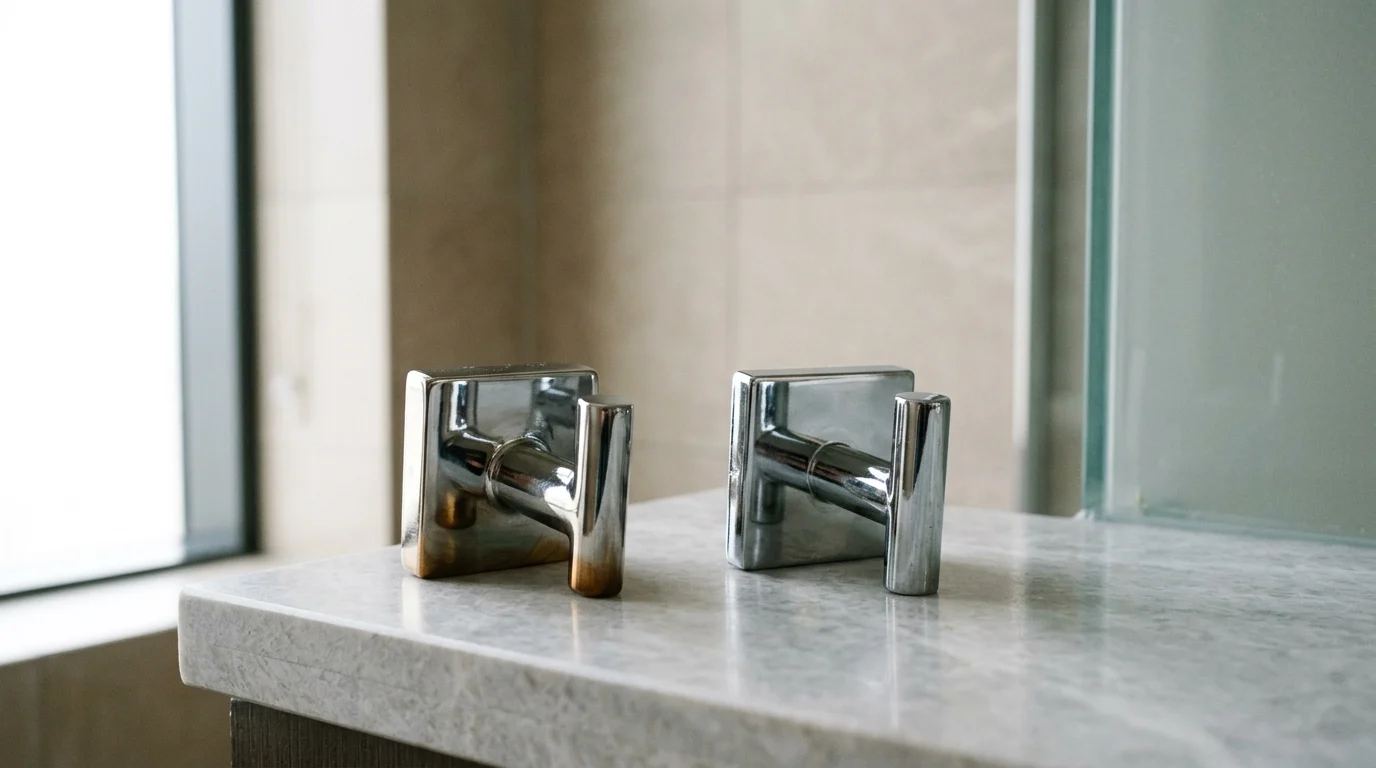
Material choice in hotel bathroom hardware now has a longer financial and operational impact than many teams assumed a few years ago. As renovation cycles stretch and maintenance costs rise, the difference between solid brass and zinc alloy is no longer just a line-item price issue; it affects durability, corrosion resistance, finish retention, and replacement frequency across hundreds of rooms. This guide explains why 2026 hospitality specifications are shifting toward solid brass, where zinc alloy still appears in the market, and how each material performs under real commercial bathroom conditions. The sections that follow will help owners, designers, and procurement teams make a clearer long-term value decision.
Why 2026 Hotel Bathroom Hardware Guides Favor Better Materials
The hospitality industry is undergoing a fundamental shift in capital expenditure strategies as hotel developers and procurement teams prepare for 2026. Historically, bathroom hardware specification often fell victim to late-stage value engineering, where premium materials were swapped for lower-cost alternatives to meet immediate budget constraints. However, rising labor costs for maintenance and increased guest sensitivity to room quality are forcing a recalibration. Industry data suggests that the average hotel renovation cycle is extending from a traditional 5- to 7-year timeframe to an 8- to 10-year horizon, demanding materials that can withstand prolonged commercial use.
As a result, modern hotel bathroom hardware guides are heavily prioritizing material integrity over nominal upfront savings. The debate between solid brass and zinc alloy is at the forefront of this shift. While both materials can be plated to look identical on opening day, their underlying metallurgical properties dictate vastly different performance trajectories in high-humidity, high-traffic environments.
How 2026 procurement priorities reshape material selection
Procurement priorities for 2026 are increasingly driven by Environmental, Social, and Governance (ESG) mandates and Total Cost of Ownership (TCO) models. Major hotel groups are implementing stricter vendor compliance programs that penalize frequent replacements and material waste. Because bathroom environments subject hardware to constant moisture, aggressive chemical cleaning, and heavy mechanical use, procurement teams are shifting away from consumable fixtures.
This shift directly impacts material selection. Specifications now frequently require hardware to carry a minimum 10-year commercial warranty, a threshold that heavily favors robust alloys. Furthermore, the push for circular economy practices in hospitality means developers are favoring materials with high end-of-life recyclability and scrap value, metrics where copper-based alloys significantly outperform complex die-cast zinc mixtures.
Why lifecycle cost, guest perception, and maintenance matter
The true cost of bathroom hardware extends far beyond the initial purchase order. Lifecycle costing reveals that the labor required to dispatch a maintenance engineer, remove a pitted towel bar or malfunctioning faucet, and install a replacement often exceeds the unit cost of the hardware itself. If a zinc alloy fixture fails at the 4-year mark, the cumulative cost of replacement destroys any initial capital savings.
Guest perception is equally critical. The tactile experience of bathroom hardware contributes heavily to the subconscious evaluation of a hotel room’s quality. Solid materials offer a distinct, heavy feel—often referred to as tactile resonance—that lighter alloys fail to replicate. Online reviews frequently cite “cheap” or “flimsy” bathroom fixtures as a negative factor, which can subtly degrade a property’s Average Daily Rate (ADR) and RevPAR over time. Maintaining a pristine finish without blistering or peeling is essential for protecting the brand’s premium positioning.
Material Differences Between Solid Brass and Zinc Alloy
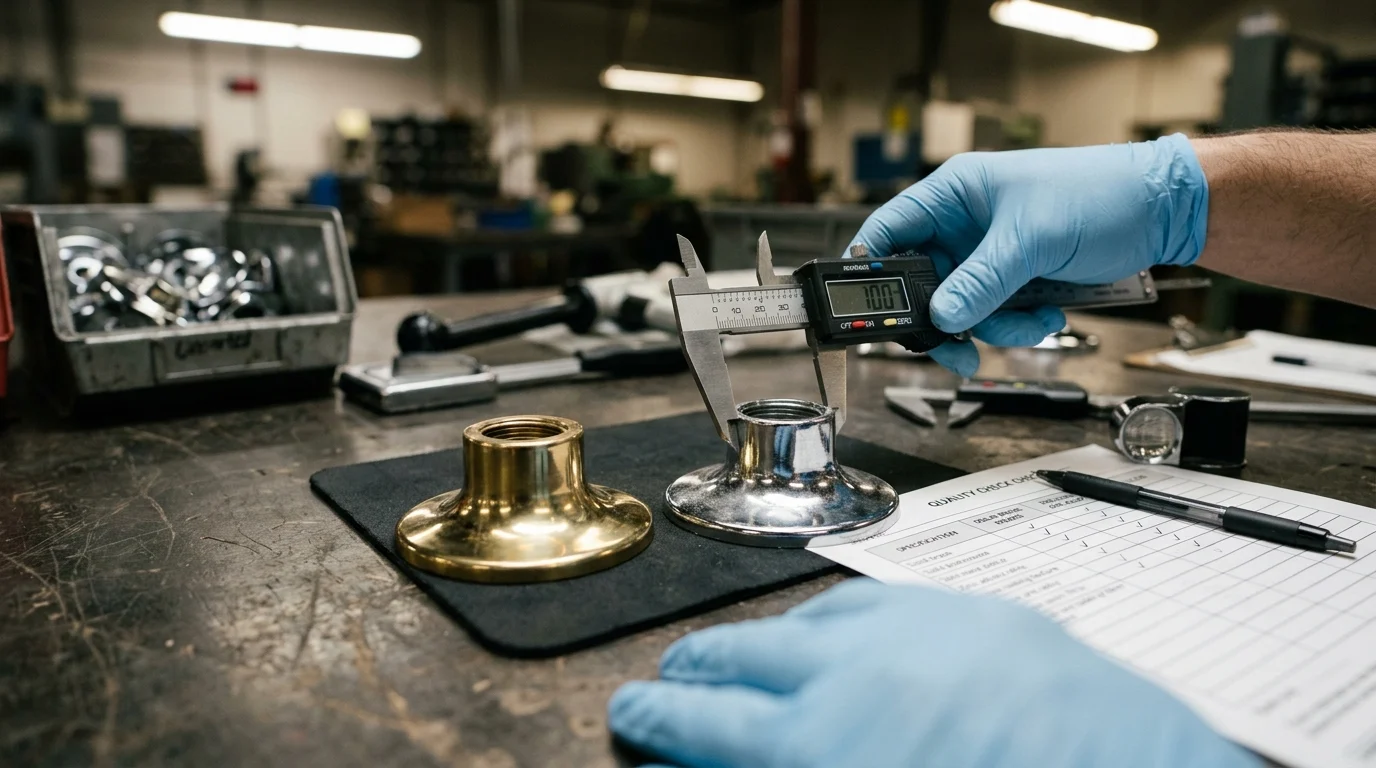
Understanding the performance gap between solid brass and zinc alloy requires examining their fundamental metallurgical compositions. Solid brass is a primary alloy of copper and zinc, typically containing 58% to 62% copper in commercial hardware applications. Zinc alloy, most commonly found in the form of Zamak (an acronym for Zinc, Aluminum, Magnesium, and Kupfer/Copper), consists predominantly of zinc (up to 95%) mixed with small amounts of other elements to facilitate die casting.
While Zamak is highly favored in mass manufacturing due to its low melting point and ease of injection molding, its chemical structure makes it inherently more vulnerable to environmental degradation than the denser, forged, or machined structure of solid brass.
How composition, corrosion resistance, and strength differ
The composition of solid brass gives it exceptional tensile strength, generally ranging from 330 to 550 MPa depending on the specific grade and manufacturing process. It is highly resistant to both structural fatigue and galvanic corrosion. Conversely, standard Zamak 3 alloys offer a lower tensile strength of approximately 280 MPa and are highly reactive. When exposed to moisture, especially if the protective plating is compromised, zinc alloy is prone to aggressive oxidation, commonly known as “white rust.”
| Material Property | Solid Brass | Zinc Alloy (Zamak 3) |
|---|---|---|
| Density | 8.4 – 8.7 g/cm³ | 6.6 g/cm³ |
| Tensile Strength | 330 – 550 MPa | 280 – 285 MPa |
| Base Corrosion Resistance | Excellent | Poor (Requires Heavy Plating) |
| Antimicrobial Efficacy | High (Inherent to Copper) | Low to None |
Furthermore, the high copper content in solid brass provides inherent antimicrobial properties, a factor that has gained significant traction in post-pandemic hospitality design. Zinc alloys lack this natural oligodynamic effect, relying entirely on surface coatings for sanitation.
Which performance factors matter most for bathroom hardware
In a hotel bathroom, the most critical performance factors are moisture resistance, chemical tolerance, and mechanical load capacity. Bathrooms routinely experience humidity levels exceeding 80%, creating a perfect environment for corrosion. Solid brass excels in these conditions; specialized DZR (dezincification-resistant) brass ensures that the zinc content is not leached out by aggressive water chemistry.
Zinc alloy hardware, particularly items subjected to mechanical stress like towel racks, grab bars, and door hinges, is susceptible to micro-cracking. Once a microscopic fissure opens the plating, moisture penetrates the zinc core. This leads to subsurface corrosion that causes the external chrome or nickel plating to bubble, blister, and eventually flake off—a catastrophic aesthetic failure that necessitates immediate replacement.
How Solid Brass Compares on Durability and Finish
The longevity of a bathroom fixture is largely dictated by how well its base material accepts and retains surface finishes. The electroplating or physical vapor deposition (PVD) processes rely heavily on the porosity and chemical stability of the substrate. Solid brass provides a vastly superior foundation for these finishes compared to die-cast zinc.
Because brass can be machined and polished to a near-flawless, non-porous surface, it requires fewer intermediary plating steps and results in a stronger molecular bond with the final finish. Zinc die-casting, by its nature, often traps microscopic gas bubbles that create a porous surface, complicating the finishing process and reducing the long-term durability of the aesthetic layer.
Why solid brass often lasts longer in hotel environments
Solid brass outlasts zinc in hotel environments primarily because of plating adherence. To plate zinc alloy, manufacturers must apply a heavy “flashing” of copper to seal the pores before applying nickel and chrome. If this copper layer is imperfect, the plating will fail. In commercial use, where fixtures are wiped down daily with industrial-grade acidic or alkaline cleaners, the finish on zinc hardware frequently begins to degrade within 24 to 36 months.
Brass hardware, on the other hand, bonds exceptionally well with nickel and chrome. When finished with advanced PVD coatings, solid brass fixtures become highly resistant to scratching, tarnishing, and chemical wear. It is common for high-quality brass fixtures in luxury hotels to maintain a flawless appearance for 10 to 15 years, requiring only standard non-abrasive cleaning.
Which quality, testing, and compliance standards buyers should verify
When specifying hardware, procurement teams must verify compliance with rigorous industry standards. Neutral Salt Spray (NSS) testing is the primary benchmark for finish durability. High-grade solid brass fixtures routinely pass 200 to over 400 hours of NSS testing without showing signs of corrosion. In contrast, standard commercial zinc alloy fixtures often struggle to pass 96 hours of NSS testing before blistering occurs.
Additionally, buyers should mandate compliance with ASME A112.18.1 / CSA B125.1 standards for plumbing supply fittings, which dictate mechanical strength and finish durability. For any fixtures interacting with potable water, NSF/ANSI 61 compliance is mandatory, requiring a maximum weighted average lead content of 0.25%. Top-tier manufacturers now utilize lead-free brass across all bathroom accessories—not just faucets—to ensure total brand consistency and environmental compliance.
Cost, Sourcing, and Logistics Trade-Offs
The decision between solid brass and zinc alloy is ultimately a financial and logistical calculation. Procurement directors must balance the strict constraints of the initial construction or renovation budget against the long-term operational expenditures of the property.
While zinc alloy offers a tempting path to value engineering on paper, the commercial realities of the global supply chain, raw material volatility, and hotel maintenance cycles paint a more complex picture. Analyzing the Total Cost of Ownership (TCO) is essential for making an informed specification.
How upfront price, replacement frequency, and total cost compare
The upfront unit cost of solid brass hardware is typically 40% to 60% higher than an equivalent zinc alloy piece. This initial premium is driven by the higher cost of raw copper and the more labor-intensive machining and forging processes. However, when factoring in a 10-year operational cycle, the financial dynamic flips.
| Cost & Lifecycle Metric | Zinc Alloy Fixtures | Solid Brass Fixtures |
|---|---|---|
| Initial Unit Cost Index | 1.0x (Baseline) | 1.4x – 1.6x |
| Typical Lifespan (Commercial) | 3 – 5 Years | 10 – 15+ Years |
| 10-Year Replacement Multiplier | 2.0x – 3.0x | 1.0x |
| Tooling / Mold Cost | High (Die-casting molds) | Low to Moderate (Machining) |
Because zinc alloy fixtures typically require replacement every 3 to 5 years in high-traffic hotels, a property will purchase the same fixture two or three times over a decade. When adding the $50 to $100 per hour labor cost for maintenance engineers to execute these replacements, the TCO of zinc alloy quickly surpasses that of solid brass, making brass the more fiscally responsible choice for long-hold assets.
What sourcing risks, lead times, and supply constraints affect decisions
Sourcing logistics also plays a critical role in material selection. Zinc alloy requires expensive steel molds for die-casting. To amortize these tooling costs, factories typically demand high Minimum Order Quantities (MOQs), often exceeding 1,000 to 2,000 units per SKU. This restricts customization for boutique hotels or smaller brand rollouts.
Solid brass, which is often CNC machined or hot-forged, requires significantly lower tooling investments, allowing manufacturers to offer MOQs as low as 300 to 500 units for custom designs. However, brass is subject to the price volatility of the global copper market, which can cause sudden shifts in procurement costs. Lead times also vary; while zinc die-casting can yield high volumes rapidly (30 to 45 days), precision brass machining may require 45 to 60 days. Procurement teams must build these lead times into their critical path schedules to avoid project delays.
How Hotels Should Choose Between Solid Brass and Zinc Alloy

Selecting the right material requires aligning the hardware specifications with the hotel’s market positioning, expected guest demographic, and long-term asset strategy. A blanket approach rarely works; instead, developers and operators must deploy a nuanced specification strategy.
By 2026, industry best practices indicate that material choices should be dictated by a combination of brand tier requirements and the specific environmental stressors of the property’s location.
Which criteria should guide specification by brand tier
For luxury and upper-upscale properties (4-star and 5-star), solid brass must be the non-negotiable standard. Guests paying premium ADRs expect tactile luxury; the substantial weight and flawless finish of brass accessories directly support the brand’s value proposition. In these tiers, any material failure is a severe brand liability.
For Midscale and Economy tiers, procurement teams can employ a hybrid strategy. High-touch, high-stress items such as faucets, shower controls, and safety grab bars should be specified in solid brass for liability and longevity reasons. Conversely, low-touch, low-stress accessories like robe hooks or high-mounted towel racks can be specified in premium zinc alloy to optimize the CapEx budget, provided they utilize upgraded multi-layer plating.
What selection framework helps procurement teams decide
To operationalize this, procurement teams should utilize a standardized selection framework. First, assess the environmental risk: properties in coastal regions or areas with high water salinity should default to solid brass due to zinc’s vulnerability to atmospheric chlorides. Second, evaluate the hold period: if the ownership group plans to hold the asset for longer than 5 years, the TCO model heavily favors brass.
Finally, consider the maintenance infrastructure: properties seeking to minimize ongoing labor costs will benefit significantly from the reduced replacement frequency and long-term reliability of solid brass fixtures.
Frequently Asked Questions
Why does solid brass outperform zinc alloy in hotel bathrooms?
Solid brass resists corrosion, holds strength longer, and better survives constant moisture and cleaning chemicals. It also maintains a heavier, premium feel that guests notice.
Is zinc alloy acceptable for hotel bathroom hardware?
Yes, for low-traffic or short-renovation projects. But for 2026 hotel specs, it’s usually less suitable because wear, plating damage, and corrosion raise replacement costs.
What is the main lifecycle cost difference between the two materials?
Solid brass often costs more upfront but needs fewer replacements and less maintenance. Zinc alloy may seem cheaper initially, but labor and downtime can erase savings fast.
How can hotel buyers verify material quality from a supplier?
Ask for the base metal specification, warranty length, and corrosion-test results. For reliable sourcing, request OEM/ODM documentation and samples from the manufacturer.
Where can hotels source custom solid brass bathroom hardware?
From a die-casting manufacturer like hzdiecasting.com that offers custom metal hardware, finishing, and commercial production support for hospitality projects.