
Introduction
Public bathrooms now require more than routine cleaning to limit cross-contamination, especially on high-touch hardware such as faucets, flush controls, and grab bars. Antimicrobial coating technology offers a way to reduce microbial buildup between cleaning cycles, but its value depends on how well it performs under constant use, humidity, and wear. This article explains the standards that should guide material selection, application methods, and durability testing so facilities can improve hygiene without sacrificing function or finish.
How Should Post-Pandemic Bathroom Safety Standards Shape the Application
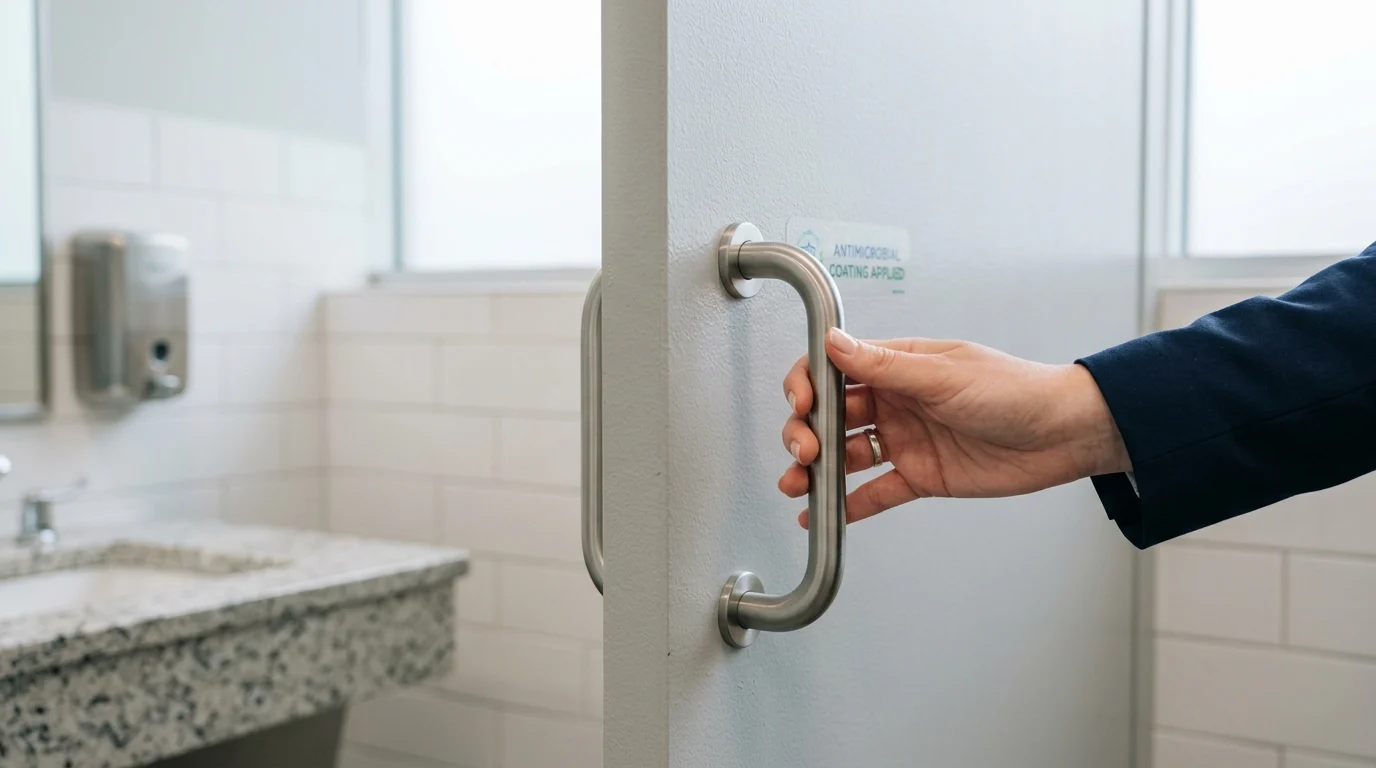
The global response to pathogenic transmission has fundamentally altered architectural infrastructure design, transitioning commercial restroom protocols from reactive sanitation to continuous, proactive surface management. Public hardware—including automated faucets, flush actuators, grab bars, and soap dispenser levers—serves as critical fomite vectors for cross-contamination. Consequently, post-pandemic facility standards now mandate the integration of antimicrobial coating technologies directly into hardware substrates. This paradigm shift requires facility managers and industrial designers to move beyond superficial aesthetics, integrating metallurgical and chemical pathogen resistance into their baseline hardware specifications to continuously protect public health.
Which hygiene and durability outcomes matter most for public bathrooms
In high-traffic commercial environments experiencing 500 to over 2,000 daily users, baseline hygiene outcomes hinge on continuous pathogen suppression between scheduled maintenance intervals. The primary objective is achieving a sustained 99.9% (3-log) reduction in microbial load, specifically targeting resilient nosocomial pathogens like MRSA and common gastrointestinal viruses. However, hygiene cannot be decoupled from mechanical durability. Hardware must withstand severe environmental stressors, including high ambient humidity, fluctuating temperatures, and repetitive mechanical impacts from rings or keys. Coatings that degrade rapidly under user friction expose the underlying brass or zinc substrates, creating microscopic fissures that harbor bacterial colonies and completely negate the initial hygienic benefits of the installation.
How should antimicrobial coatings be defined and evaluated
Antimicrobial coatings must be explicitly defined by their active mechanisms—whether biocidal (actively destroying cell walls and neutralizing pathogens) or biostatic (inhibiting cellular reproduction without immediately killing the organism). Evaluation protocols require rigorous baseline definitions, such as establishing the minimum inhibitory concentration (MIC) of the active agent embedded in the polymer matrix. Efficacy should not be evaluated solely in sterile laboratory conditions but through simulated environmental aging that mimics real-world restroom conditions. Industry-leading specifications now require applied coatings to maintain a minimum 2-log (99%) reduction in bioburden even after 10,000 mechanical abrasion cycles, ensuring the chemical application provides a genuine lifecycle benefit rather than a temporary, superficial marketing claim.
What Technical Standards and Comparison Criteria Matter for Antimicrobia
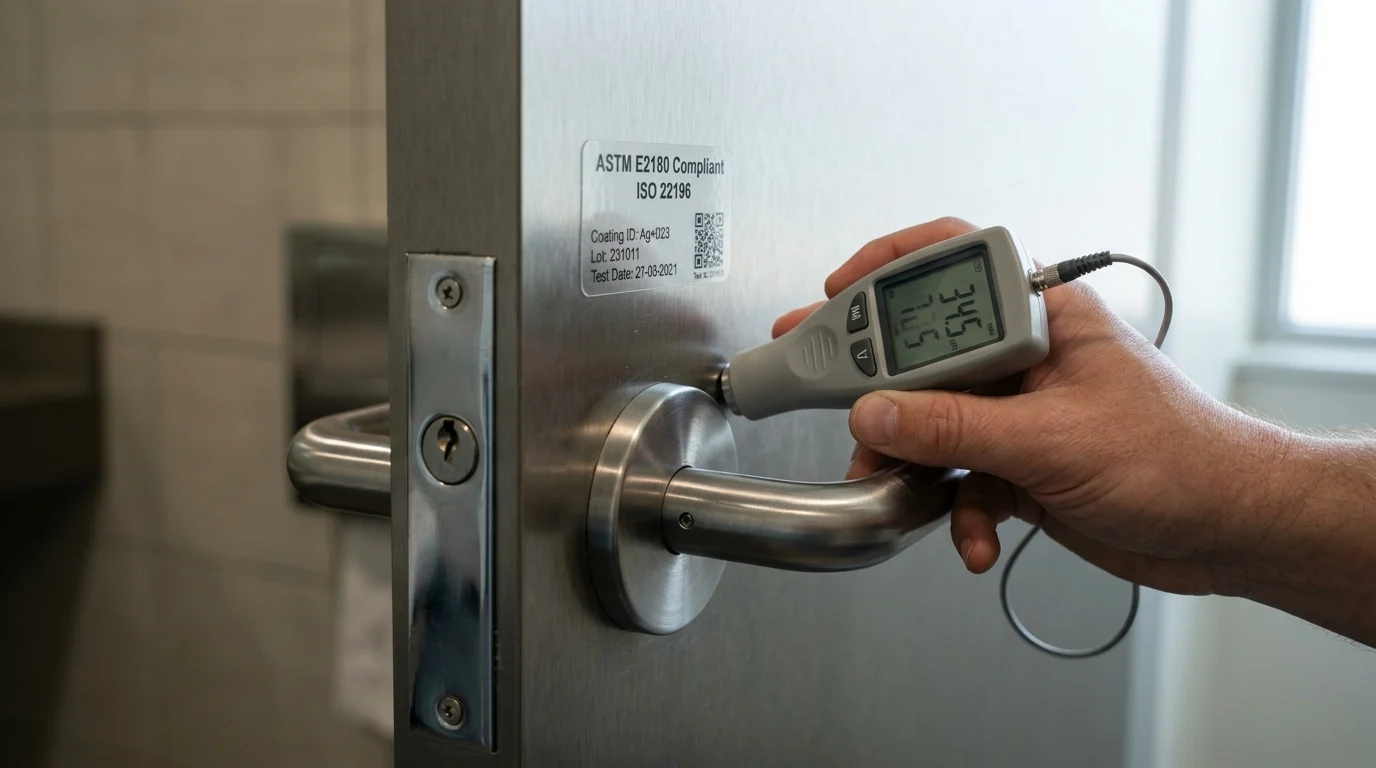
Establishing a robust specification for public hardware demands strict adherence to standardized testing protocols. Subjective manufacturer claims of “self-cleaning” or “germ-free” surfaces must be replaced with empirical data derived from internationally recognized methodologies. Comparing coating technologies requires a multidimensional analysis encompassing biocidal efficacy, mechanical adhesion, and chemical resilience against harsh industrial cleaners.
Which performance metrics, test methods, and surface types should be used
The evaluation of antimicrobial efficacy relies heavily on ISO 22196 for measuring antibacterial activity on plastics and non-porous surfaces, alongside ISO 21702 for quantifying antiviral performance—a critical addition in the post-pandemic landscape. Specifications must clearly delineate the target pathogens, typically demanding a >99.9% reduction against Staphylococcus aureus and Escherichia coli within a strict 24-hour contact window. Furthermore, mechanical durability should be quantified using the Taber abrasion test (ASTM D4060). For commercial bathroom hardware to be deemed viable, acceptable coatings must withstand a minimum of 1,000 Taber cycles with a weight loss of less than 50 milligrams, ensuring the antimicrobial layer survives aggressive daily handling and abrasive cleaning tools.
How do coating chemistries, wear resistance, and cleaning compatibility compare
The selection of coating chemistry dictates both immediate biocidal performance and long-term maintenance requirements. Silver-ion (Ag+) epoxies, solid copper alloys, and silane quaternary ammonium compounds represent the primary industrial options. Facility operators must evaluate these against the harsh alkaline and acidic cleaning agents commonly used in commercial sanitation, as chemical incompatibility can strip the active layer within months.
| Chemistry Type | Active Mechanism | Taber Durability | Cost Premium | Cleaning Agent Compatibility |
|---|---|---|---|---|
| Silver-Ion (Ag+) Epoxy | Metabolic and DNA disruption | >1,000 cycles | 15-20% | High (Resists pH 3-10 solutions) |
| Solid Copper Alloy | Contact ion release | Lifetime (Substrate) | 30-40% | Moderate (Requires non-abrasives) |
| Silane Quaternary | Physical membrane puncture | ~500 cycles | 5-10% | Low (Degrades rapidly in high pH) |
Silver-ion technologies currently dominate the commercial sector due to their optimal balance of high chemical resistance and acceptable cost premiums, whereas solid copper provides unmatched longevity at the expense of higher capital output and complex aesthetic maintenance.
How Should Facilities Specify, Validate, and Maintain Post-Pandemic Bath

Transitioning from theoretical material specification to physical deployment involves mitigating supply chain risks and establishing verifiable lifecycle maintenance protocols. Facility operators and procurement teams must navigate sourcing complexities, ensuring that the specified antimicrobial technologies are properly validated at installation and remain economically viable over the hardware’s entire operational lifespan.
What procurement, installation, and documentation steps reduce risk
Procurement strategies for specialized antimicrobial hardware often require navigating increased lead times and minimum order quantities (MOQs). Commercial manufacturers typically impose MOQs ranging from 250 to 500 units for custom-coated architectural hardware, necessitating precise inventory forecasting for large-scale facility upgrades. Installation must be accompanied by comprehensive supply chain documentation, including Environmental Protection Agency (EPA) registration certificates in the United States or Biocidal Products Regulation (BPR) compliance dossiers in the European Union. This documentation validates the safety and efficacy of the active ingredients, shielding facility operators from legal liability regarding unsubstantiated public health claims. Post-installation, validation should include baseline adenosine triphosphate (ATP) swab testing to establish a metric for ongoing surface cleanliness.
How should operators balance cost, reapplication cycles, and longevity
Balancing upfront capital expenditure with long-term operational savings is critical for the institutional adoption of advanced coatings, ensuring that hygiene protocols remain both highly effective and economically sustainable over the facility’s lifespan.
Key Takeaways
- The most important conclusions and rationale for Post-Pandemic Bathroom Safety: Standards for the Application of Antimicrobial Coating Technology in Public Hardware
- Specs, compliance, and risk checks worth validating before you commit
- Practical next steps and caveats readers can apply immediately
Frequently Asked Questions
What should post-pandemic bathroom hardware standards require?
They should require continuous antimicrobial protection, not just routine cleaning. Public hardware should be specified for high-traffic use, durable finishes, and verified pathogen reduction on surfaces like faucets, flush buttons, and grab bars.
Which test standards are most important for antimicrobial coatings?
Use ISO 22196 for antibacterial performance and ISO 21702 for antiviral performance. For wear resistance, ask for Taber abrasion results, such as ASTM D4060, with proof the coating still performs after repeated cycles.
How durable should antimicrobial coatings be on public hardware?
A good coating should keep working after heavy handling and cleaning. Look for at least 99% bioburden reduction after 10,000 abrasion cycles and minimal material loss under Taber testing.
Which coating chemistry is best for commercial restrooms?
Silver-ion epoxy is often the best balance of cost, chemical resistance, and durability. Copper alloys last long but cost more, while silane quaternary coatings can wear faster and tolerate harsh cleaners less well.
How can facility managers verify antimicrobial claims?
Ask for third-party test data, target-pathogen results, and cleaning-compatibility proof. Claims should include performance against Staphylococcus aureus and E. coli, plus evidence the coating survives real restroom cleaners and abrasion.