
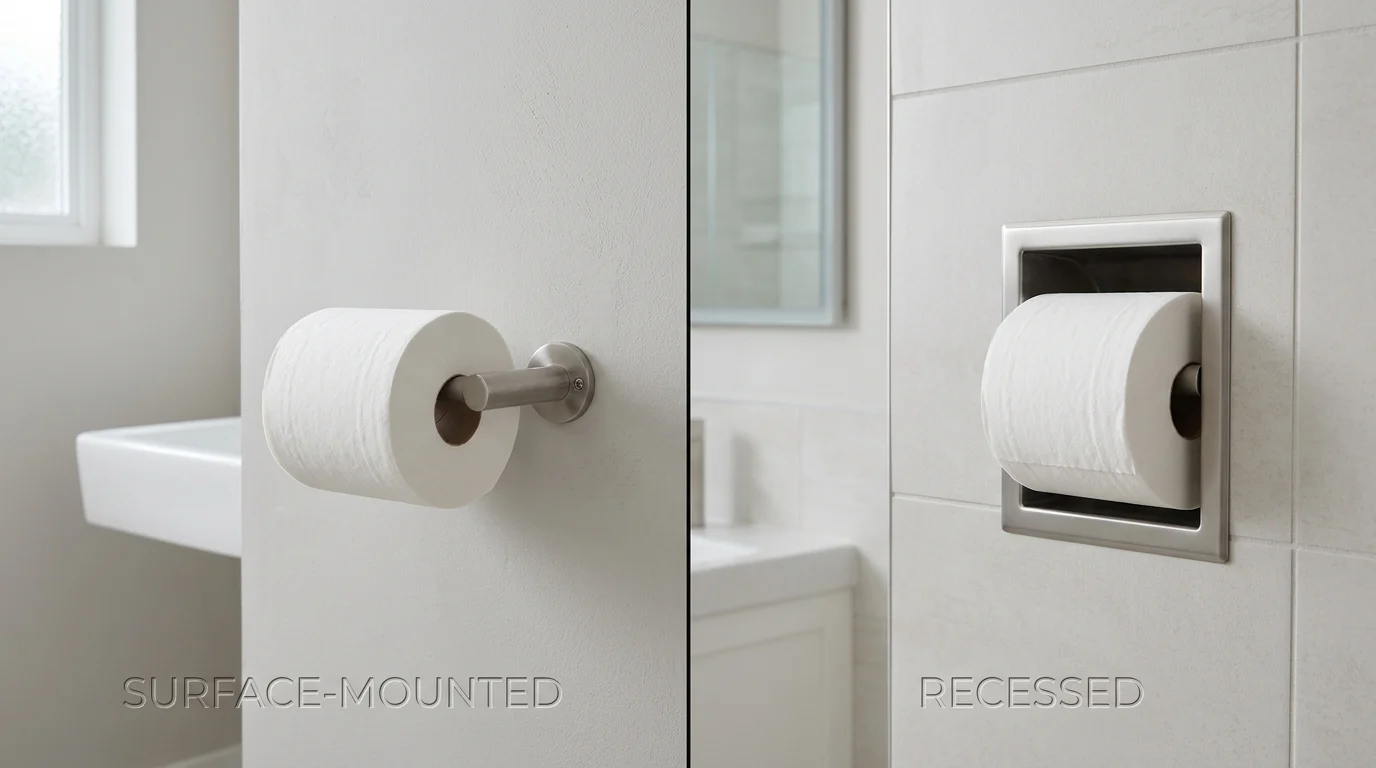
Choosing a toilet paper holder is often a small specification with outsized impact on layout, accessibility, and maintenance. Surface-mounted and recessed models solve the same basic need in very different ways: one installs quickly and works in more wall types, while the other preserves a cleaner profile but depends on available cavity depth. For new builds, renovations, and code-sensitive restrooms, that difference can affect clearances, installation cost, and long-term serviceability. This article explains how each holder type fits common project conditions so you can select the option that aligns with the wall assembly, budget, and design goals.
Surface-Mounted vs Recessed Toilet Paper Holders: Project Fit
Specifying the appropriate toilet paper dispenser requires balancing spatial constraints, architectural intent, and facility maintenance protocols. The primary decision between surface-mounted and recessed toilet paper holder types dictates not only the visual footprint of the washroom but also the underlying structural requirements of the partition or wall assembly.
Architects and procurement managers must evaluate these fixtures early in the design phase. Retrofitting from one type to another introduces significant labor costs and potential structural compromises, making initial specification critical for long-term operational success.
Which project constraints favor each holder type
Spatial limitations frequently dictate the initial viability of a dispenser type. Surface-mounted units typically project 3.5 to 5 inches from the finished wall surface. In compact commercial washrooms or narrow ADA-compliant stalls, this protrusion can encroach on the required 60-inch turning radius or impede the minimum clear floor space necessary for wheelchair transfers.
Conversely, recessed models eliminate this protrusion by housing the paper roll within the wall cavity, maintaining a flush or near-flush architectural profile. However, this necessitates a minimum rough-in depth of 3.25 to 4 inches. Projects utilizing standard 2×4 stud framing can generally accommodate this, but specialized partitions, thin masonry walls, or demountable architectural walls may lack the requisite depth, forcing designers to default to surface-mounted alternatives.
How do wall construction and maintenance needs affect selection
Wall construction directly impacts the feasibility of recessed installations. Integrating a recessed fixture requires precise drywall cutouts and often necessitates horizontal blocking between studs to secure the unit flange. Furthermore, the wall cavity must be free of mechanical, electrical, and plumbing (MEP) routing. In fire-rated wall assemblies, penetrating the drywall with a recessed dispenser may compromise the fire barrier, requiring additional intumescent putty pads or specialized fire-rated enclosures that inflate project complexity.
From a maintenance perspective, surface-mounted holders offer superior adaptability. If a facility upgrades its paper standards or if a unit sustains damage, swapping a surface-mounted fixture requires minimal patching. Replacing a recessed unit binds the facility to the exact rough-in dimensions of the original cutout, severely limiting future replacement options without engaging in extensive drywall repair and repainting.
Key Technical and Commercial Differences
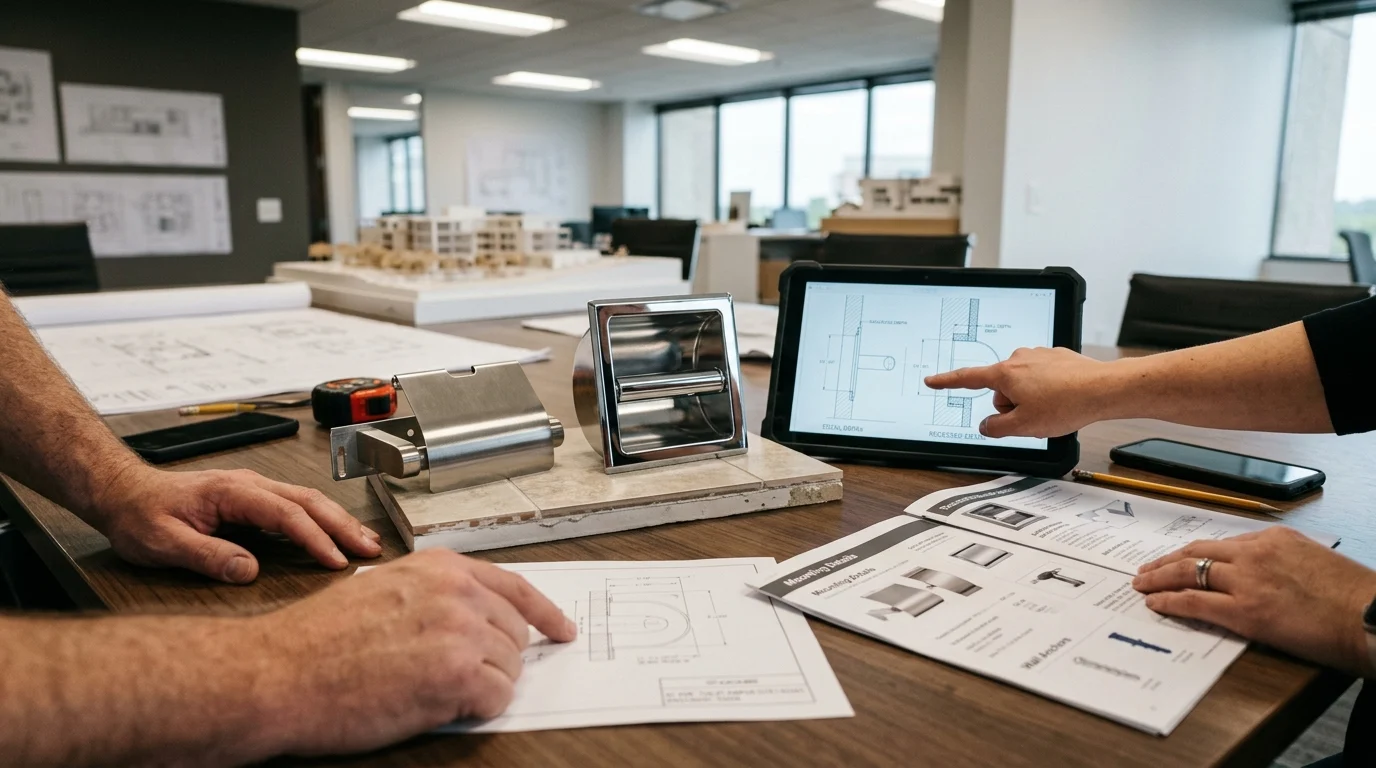
Beyond spatial and architectural integration, the choice between surface-mounted and recessed fixtures carries distinct technical and commercial implications. Facility managers must weigh lifecycle durability against upfront procurement and installation economics.
How do installation, durability, clearance, and hygiene compare
Durability and hygiene profiles vary significantly based on mounting style. Recessed units are inherently protected from lateral impact shear forces, making them highly resistant to accidental damage in high-traffic environments. Surface-mounted units, while more exposed, can be specified with heavy-duty brackets designed to withstand up to 250 lbs of downward force, provided the in-wall blocking is adequate.
| Feature | Surface-Mounted | Recessed |
|---|---|---|
| Wall Projection | 3.5″ – 5.0″ | 0.25″ – 0.5″ (Flange only) |
| Impact Resistance | Moderate to High (relies on backing) | Very High (protected by wall) |
| Hygiene/Cleaning | High (accessible from all sides) | Moderate (dust collects in niche) |
| ADA Compliance | Requires careful placement | Easily avoids grab bar clashes |
Hygiene protocols also influence selection. Surface-mounted dispensers are fully exposed, allowing maintenance staff to rapidly wipe down all exterior surfaces. Recessed niches, particularly those with deep cowls, can accumulate paper dust and require more deliberate cleaning efforts to maintain sanitary standards.
How do cost, labor, and lead time compare
The commercial realities of cost, labor, and lead times heavily favor surface-mounted units for large-scale, budget-conscious projects. Standard commercial surface-mounted hardware is highly commoditized, generally costing between $15 and $45 per unit, with installation requiring merely 10 to 15 minutes of labor. Lead times are virtually non-existent for standard stainless steel models.
Recessed units carry a higher initial material cost, typically ranging from $25 to $85, but the true commercial differentiator is labor. Installation requires 30 to 45 minutes per unit to measure, cut, frame, and secure the housing. Additionally, architectural recessed units with custom finishes (such as matte black or PVD brass) often carry a 4-to-6-week lead time and may require a Minimum Order Quantity (MOQ), complicating procurement for fast-track construction schedules.
Decision Guide by Use Case
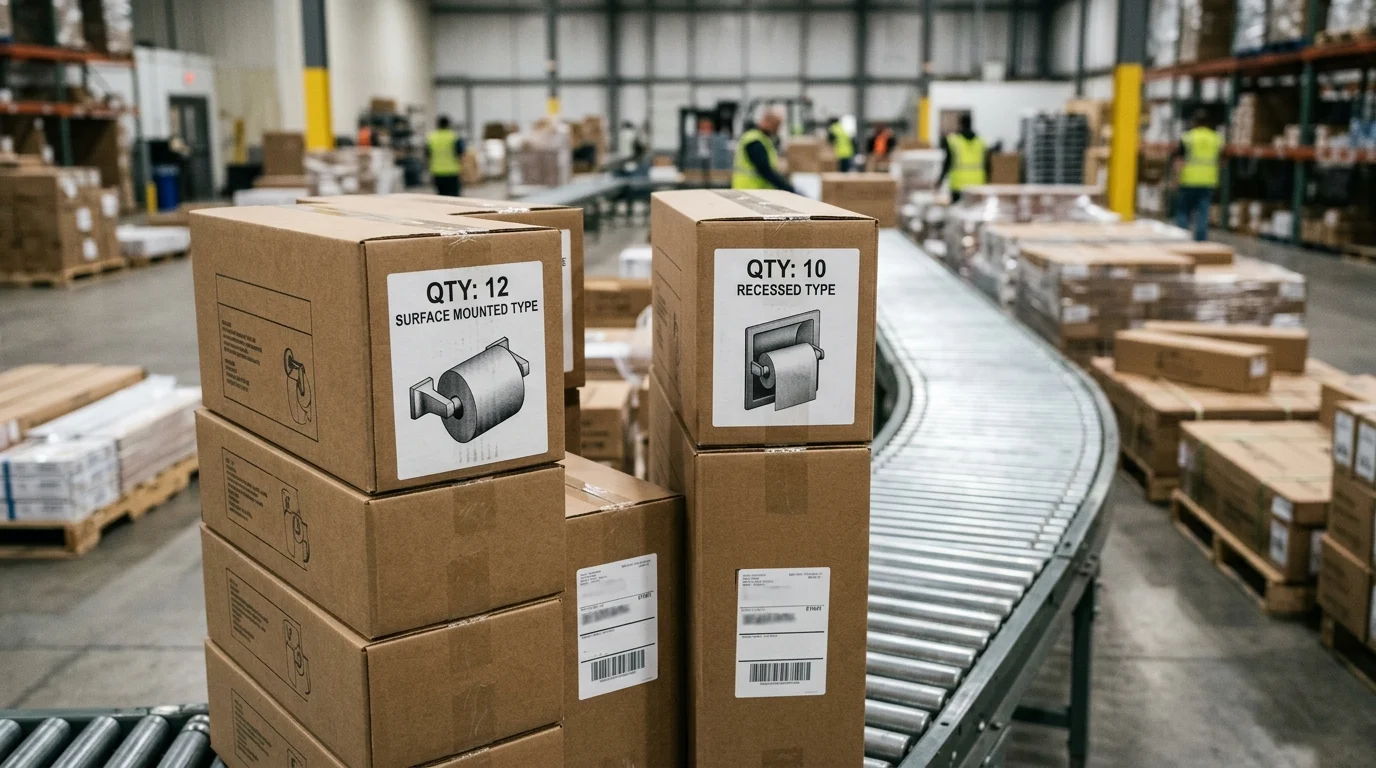
Navigating the specification process requires a methodical approach tailored to the specific demands of the facility. The operational profile of the building ultimately dictates which mounting strategy provides the best return on investment.
What step-by-step process helps choose the right option
Selecting the right fixture involves a rigid sequence of technical checks. First, verify ADA clearance parameters; standards mandate a minimum of 1.5 inches of absolute clearance below horizontal grab bars, which often forces surface-mounted units into awkward positions or favors recessed units directly below the bar. Second, audit the wall cavity for structural depth, fire ratings, and MEP clashes. Third, evaluate the risk of vandalism and the expected maintenance intervals, which will dictate whether a standard roll or a high-capacity dispenser is required.
How do hospitality, multifamily, healthcare, and education projects
cts differ?
Different commercial sectors exhibit distinct preferences based on user behavior. Hospitality projects heavily favor recessed holders for their sleek, unobtrusive aesthetics, maximizing perceived space in compact en-suite bathrooms. In contrast, healthcare facilities rely predominantly on surface-mounted dispensers due to strict infection control protocols that demand seamless, easily sanitized surfaces without recessed cavities where pathogens might linger.
Education and high-traffic public venues prioritize capacity and tamper resistance over aesthetics. These facilities frequently utilize surface-mounted, multi-roll, or high-capacity dispensers capable of holding up to 9-inch jumbo rolls to extend maintenance intervals and reduce the risk of stock-outs. Multifamily residential projects often employ a blended strategy, utilizing cost-effective surface-mounted units in standard apartments while reserving premium recessed fixtures for luxury penthouse tiers or public clubhouse washrooms.
Key Takeaways
- The most important conclusions and rationale for Toilet Paper Holder Types Explained: Surface-Mounted vs Recessed for Different Projects
- Specs, compliance, and risk checks worth validating before you commit
- Practical next steps and caveats readers can apply immediately
Frequently Asked Questions
Which toilet paper holder type is better for tight washroom spaces?
Recessed holders are usually better because they sit flush with the wall and save clearance. Surface-mounted models project 3.5″ to 5″, which can interfere with ADA turning space or stall movement.
When should a project choose a surface-mounted toilet paper holder?
Choose surface-mounted when wall depth is limited, the wall has MEP routing, or you want faster replacement and simpler maintenance. They are also the lower-cost option for many commercial projects.
What wall conditions are needed for a recessed toilet paper holder?
You need enough rough-in depth, typically 3.25″ to 4″, plus clear cavity space, proper blocking, and no conflict with wiring or plumbing. Fire-rated walls may need extra rated components.
Which holder type is easier to maintain and replace?
Surface-mounted holders are easier to maintain and replace because they need minimal patching. Recessed units are tied to the original cutout size, so replacements can require drywall repair.
Are recessed toilet paper holders more durable in high-traffic restrooms?
Yes. Recessed holders are better protected from side impacts because they sit inside the wall. Surface-mounted units can still be durable if installed with strong backing and heavy-duty brackets.